
Do You Know China Kept its Paper-Making Technology a Secret for 500 Years?
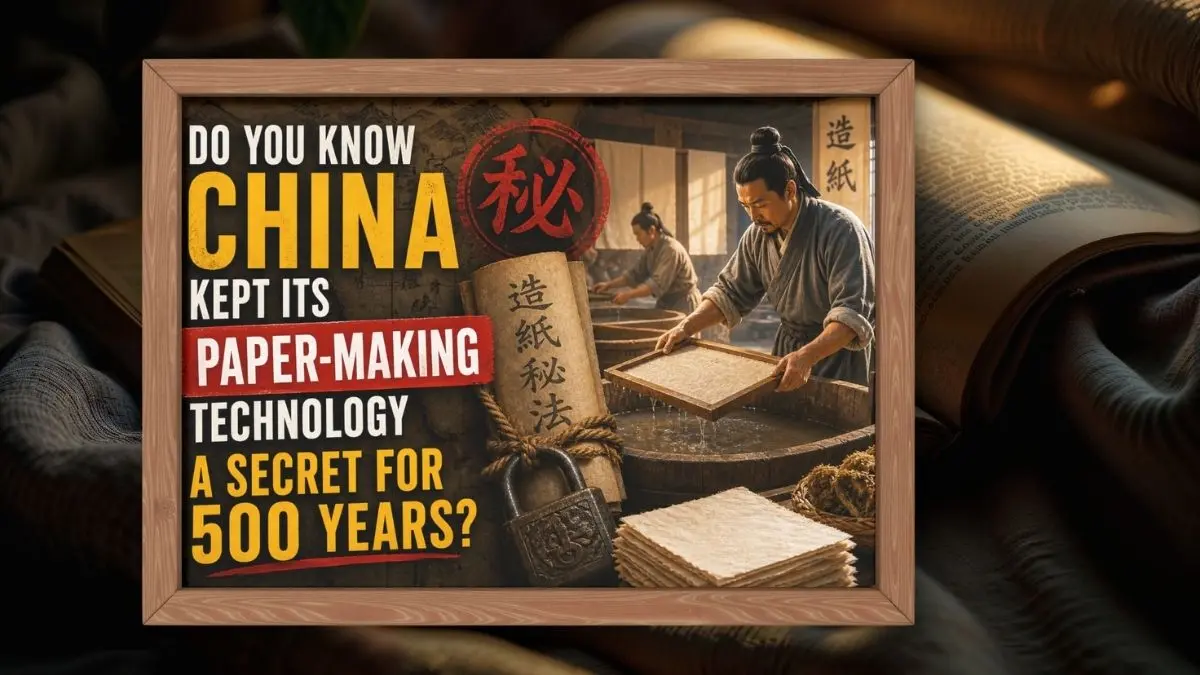
Who Invented Paper? History agrees on one name when it comes to modern paper: Cai Lun (Tsay Lun).
Have you ever thought that our world—knowledge, history, economy, even our emotions—depends on one delicate thing? Paper.
In this modern world, when digital screens are everywhere, paper importance can’t be denied. But where did paper come from? Who invented it? And has its secret been hidden for centuries?
Let us go on a journey through history and find the truth behind the invention of paper.
Who Invented Paper? Full History
Paper is everywhere. It’s in the packages at your door, the books you read, the money in your pocket, and your shopping receipts. But most people never think about where paper came from or who invented it.
Today, the paper industry is huge. In 2025, it is worth about $394 billion and is expected to grow even more in the coming years. All of this started because one man in China had a smart idea nearly 2,000 years ago.
Before paper, people used heavy and expensive materials to write on, like wood, bamboo, or cloth. This made writing difficult and limited. When paper was invented, it made writing easier, cheaper, and more common. It helped spread knowledge and changed the world.
But this powerful invention was kept secret in China for about 500 years. It was protected like a national treasure. Later, after a major battle, the secret spread to other regions and slowly reached the rest of the world.
This is the story of paper—from early bamboo and simple materials to modern paper factories and new smart technologies used today.
Before Paper: Ancient Writing Materials and Their Limitations
For thousands of years, people struggled to find a good way to write and store information. Every method they used had problems, which made learning and sharing knowledge difficult.
Clay Tablets and Stone (3000 BCE and Earlier)
In ancient Mesopotamia (modern Iraq), people wrote on clay tablets using sharp tools.
Problems:
- Very heavy
- Easily damaged by water
- Hard to carry
- Slow and difficult to write
Some messages were carved into stone. These lasted long but took a lot of time and effort.
Papyrus (Ancient Egypt)
Egyptians made papyrus from plant strips pressed together. It was the first material similar to paper.
Advantages:
- Lighter than clay
- Easy to roll and store
Problems:
- Easily torn
- Damaged by moisture
- Hard to use
- Only made in Egypt
👉 Important: Papyrus is not real paper. It is made by layering strips, while real paper is made from pulp.
Parchment and Vellum (Medieval Times)
These were made from animal skin (sheep, goats, calves).
Advantages:
- Very strong and long-lasting
- Good for detailed writing
Problems:
- Very expensive
- Needed many animals
- Took a lot of time to make
- Only rich people could afford it
Bamboo and Silk (Ancient China)
Bamboo Strips
Chinese people wrote on bamboo strips tied together.
Problems:
- Extremely heavy
- Hard to carry
- Difficult to store
- Not easy to read
Silk Cloth
Silk was also used for writing important documents.
Advantages:
- Light and smooth
- Good for writing
Problems:
- Very expensive
- Only rich people could use it
The Big Problem
All these materials had major issues:
- Too heavy (clay, stone, bamboo)
- Too expensive (silk, parchment)
- Too fragile (papyrus)
- Too hard to produce
The Need for Something Better
By the 1st century CE, people needed a writing material that was:
- Light and easy to carry
- Affordable for everyone
- Strong and long-lasting
- Easy to make in large amounts
👉 The solution came from ancient China—and it changed the world forever.
Who Was Cai Lun? The Man Behind Paper
Cai Lun was a government official in ancient China during the Han Dynasty. He is known as the man who improved the process of making paper—something the world still uses today.
He was born around 50–62 CE in a poor family. Not much is known about his early life, but he worked hard and slowly rose in the royal court.
His Rise in the Royal Court
Cai Lun worked in the emperor’s palace and gained important roles over time:
- Managed royal documents
- Worked with the imperial library
- Supervised making of tools and supplies
Because of his skills, he became a trusted advisor.
The Problem That Changed Everything
One day, the emperor saw a big problem in the royal library:
- Books made of bamboo and wood were very heavy
- Hard to carry and store
- Difficult to use
The emperor asked Cai Lun to fix this issue.
👉 This problem inspired him to find a better writing material.
The Invention of Paper (105 CE)
After years of testing, Cai Lun found a smart solution.
Instead of expensive materials, he used:
- Tree bark
- Hemp
- Old cloth (rags)
- Fishing nets
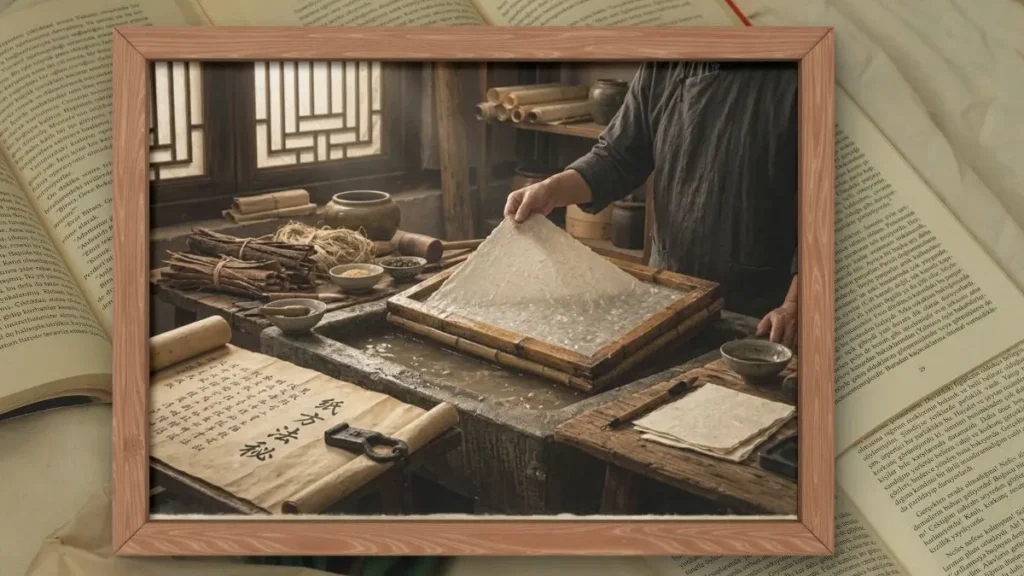
He mixed these with water, turned them into pulp, and formed thin sheets.
👉 This became the first real paper-making method.
The emperor was impressed and rewarded him.
A Smart Idea from Nature
Some stories say Cai Lun got his idea by watching wasps.
Wasps chew wood and turn it into paper-like nests.
👉 This is very similar to how paper is made.
A Famous Story (Legend)
There is also a popular story about him:
People didn’t believe in paper at first.
So Cai Lun pretended to die. His family burned paper as an offering.
Then he came back alive and said:
👉 The paper helped him return.
After this, people started believing in paper’s value.
His Sad Ending
Even after his success, his life ended sadly.
Due to palace politics:
- He was accused of being part of a plot
- Ordered to be punished
Instead of facing humiliation, he took poison and ended his life.
His Lasting Legacy
Even today, Cai Lun is remembered as one of the most important inventors in history:
- The only known inventor among China’s great inventions
- Ranked among the most influential people in history
- Worshipped as a symbol of paper-making
- His hometown still produces paper
How Cai Lun Made Paper
Using Waste Materials
His biggest idea was using things people threw away:
- Tree bark
- Hemp fibers
- Old clothes
- Fishing nets
👉 Turning waste into something useful was a revolutionary idea.
Simple Paper-Making Process
1. Collect Materials
Gather and cut raw materials into small pieces.
2. Soak and Beat
Soak in water and beat them until soft pulp forms.
3. Make a Mixture
Mix pulp with water evenly.
4. Form Sheets
Pour mixture onto a flat screen to shape paper.
5. Drain Water
Let water flow out and press the sheet.
6. Dry the Paper
Hang it to dry in the sun.
👉 The fibers stick together and form strong paper.
Why This Was So Special
Cai Lun’s paper was:
- Light
- Strong
- Cheap
- Easy to make
- Good for writing
👉 It was much better than bamboo, silk, or papyrus.
What About Earlier Paper?
Paper-like materials existed before him, but they had problems:
- Poor quality
- Hard to make
- Not reliable
👉 Cai Lun didn’t just invent paper—he improved and standardized it.
Why He Matters
His work made paper:
- Easy to produce
- Affordable for people
- Available across the empire
👉 This helped spread knowledge and changed the world forever.
How Paper Improved After Its Invention (105 CE)
After Cai Lun introduced papermaking, the story didn’t stop there. In fact, this was just the beginning. Chinese craftsmen quickly started improving the process—and what followed was a wave of innovations that made paper stronger, smoother, cheaper, and more useful than ever before.
Within just a few decades, paper was no longer a simple experiment. It became one of the most important materials in human history.
New Materials: Turning Nature Into Better Paper
Chinese papermakers began experimenting with different natural fibers to improve quality:
- Bamboo → Strong and long-lasting (used for official records)
- Mulberry Bark → Smooth and high-quality (premium paper)
- Hemp & Rattan → Durable and flexible (daily use papers)
- Seaweed (later in Korea) → Unique texture and adaptability
👉 This was revolutionary because paper could now be made in different grades, from cheap everyday sheets to high-quality writing paper.
Smart Technology: Making Paper Even Better
1. Sizing (A Game-Changer Innovation)
One big problem with early paper was that ink would spread too much.
To fix this, Chinese makers added starch or animal glue on the surface.
✔ Result:
- Ink stayed clear and sharp
- Writing became neat and readable
- Paper lasted longer
2. Dyeing & Insect Protection
Chinese papermakers discovered something surprising…
They started coloring paper yellow, not just for beauty—but for protection.
✔ Why yellow?
- It repelled insects
- Protected documents for centuries
- Became a symbol of royal authority
3. Improved Paper Molds (Production Breakthrough)
Early paper molds were rough and slow to use.
Chinese innovators created:
- Smooth bamboo screens
- Fine mesh molds
- Reusable frames
✔ Result:
- Faster production
- Even, smooth sheets
- Mass production became possible
👉 This small change helped turn paper into a large-scale industry.
Different Forms of Paper
Paper wasn’t just one thing anymore—it evolved into multiple formats:
Scrolls
- Long sheets joined together
- Used for books, art, and official texts
Flat Sheets
- Standard sizes for daily writing
- Easy to store and transport
Decorative Papers
- Used in art, ceremonies, and religion
- Designed for beauty and culture
The Big Impact: How Paper Changed China
By the 3rd century CE, paper had completely transformed Chinese society:
✔ Became the main writing material
✔ Spread to Korea, Japan, and Vietnam
✔ Made knowledge cheaper and accessible
✔ Boosted education and literacy
✔ Strengthened government record-keeping
Before paper, knowledge was limited to the rich.
After paper, learning became available to everyone.
China’s 500-Year Monopoly on Papermaking
One of the most surprising facts in history is this:
👉 After Cai Lun invented paper around 105 CE, China kept the secret hidden for nearly 500 years.
This wasn’t an accident.
It was a smart and powerful strategy.
China knew that paper was not just a material—it was power.
Why China Protected the Secret
1. Economic Power (Money & Trade)
Paper quickly became a valuable product.
- China exported paper at high prices
- Other countries depended on Chinese supply
- It strengthened trade routes like the Silk Road
- The empire earned huge wealth
👉 Controlling paper meant controlling global trade advantage.
2. Political & Military Advantage
Paper made China stronger from the inside.
- Better record-keeping for taxes and population
- Faster communication across the empire
- Organized military planning and strategies
- Stronger administration than rival nations
While others struggled with heavy materials, China had efficient systems.
3. Cultural Dominance (Knowledge = Power)
Paper helped ideas spread faster.
- More books, more learning
- Preservation of knowledge for generations
- Growth of philosophy, science, and art
- Expansion of Chinese culture beyond borders
Paper turned China into a knowledge superpower.
Strict Rules to Protect the Secret
China treated papermaking like a top-secret technology.
Possible restrictions included:
- Only trained workers could learn the process
- Papermakers were not allowed to leave the country
- Sharing secrets was strictly forbidden
- Serious punishment (even death) for leaks
- Government control over production
👉 In simple words: Paper was guarded like gold.
How Long Did the Secret Last?
China successfully protected papermaking for 500–600 years:
- 105 CE → Paper officially introduced
- 6th century → Spread to Korea & Japan
- 7th century → Reached Central Asia
- 751 CE → Turning point (Battle of Talas)
- After 751 CE → Secret begins spreading worldwide
👉 That’s centuries of control over one of the most important inventions ever.
How the Secret Slowly Leaked
Even the strongest secrets can’t stay hidden forever…
1. Buddhist Monks
- Traveled across Asia
- Carried books and knowledge
- Introduced papermaking in new regions
2. Traders on the Silk Road
- Observed papermaking techniques
- Shared ideas during travel
- Spread knowledge slowly
3. Cultural Exchange
- Scholars and artists shared skills
- Diplomatic missions carried knowledge
- Curiosity led to discovery
👉 Still, the spread was slow…
The real breakthrough came after a major war.
The Curiosity Twist
For centuries, the world didn’t know:
- How paper was made
- Why China was so advanced
- What secret gave them this advantage
Then suddenly…
⚔️ A single battle changed everything.
⚔️ Skilled papermakers were captured.
⚔️ And the secret finally escaped China.
👉 That moment reshaped world history forever.
From a Chinese Secret to an Asian Revolution
After Cai Lun invented paper, China tried to keep it secret—but knowledge has a way of traveling.
Slowly, through monks, traders, and cultural exchange, papermaking began spreading across Asia. And once it left China… every region made it even better.
Korea: The First to Improve Paper (6th Century)
Korea was one of the earliest countries to adopt papermaking.
But they didn’t just copy China—they improved it.
Key Innovations
- Used rice straw and seaweed
- Experimented with local plant fibers
- Created stronger and more flexible paper
👉 This gave Korean paper a unique identity.
Big Achievement
Korea later invented metal movable type (1234 CE)—centuries before Johannes Gutenberg.
👉 This made Korea a printing pioneer long before Europe.
Japan: Turning Paper into Art (7th Century)
Papermaking reached Japan around 610 CE, likely through a Buddhist monk named Don-Cho.
At first, paper was used for:
- Government records
- Official documents
But then something changed…
The Role of Buddhism
- Religious texts increased demand for paper
- Monasteries became production centers
- Paper became part of daily life
Japanese Innovation: Washi Paper
Japan didn’t just use paper—they perfected it.
What is Washi?
- Strong yet lightweight
- Beautiful and artistic
- Long-lasting and flexible
Unique Uses
- Room dividers (paper walls)
- Fans, lanterns, umbrellas
- Even samurai armor made of paper
👉 In Japan, paper became more than material—it became culture.
Tibet & Central Asia: Silk Road Expansion (7th Century)
Papermaking moved further through the Silk Road trade network.
In Tibet
- Replaced palm leaves for writing
- Used mainly for Buddhist texts
- Book shapes still reflect old traditions
In Central Asia
Cities like Samarkand became early production hubs.
👉 Here’s the interesting part:
Even before the famous battle, Chinese papermakers were sometimes captured and forced to teach their skills.
This hinted at what was coming next…
The Silk Road Effect
By the 8th century, papermaking had spread across:
- China → Korea → Japan
- China → Tibet → Central Asia
👉 But it still hadn’t reached the Islamic world or Europe.
That required a dramatic event…
The Turning Point: Battle of Talas (751 CE)
This was the moment that changed everything.
What Happened?
- Tang China vs Abbasid Caliphate
- Battle took place in Central Asia
- The Abbasids won
👉 But the real victory wasn’t land—it was knowledge.
The Secret Finally Escapes
After the battle, the Abbasids captured Chinese prisoners, including skilled papermakers like Tou Houan.
👉 They were forced to reveal the secret of papermaking.
This ended China’s 500-year monopoly forever.
Islamic World: From Craft to Industry (8th–10th Century)
Once papermaking reached the Islamic world, it didn’t just survive—it evolved rapidly.
Major Islamic Innovations
1. New Materials
Since Chinese materials weren’t available, they used:
- Cotton
- Linen
- Flax
👉 Result: Stronger and more durable paper
2. Machine-Based Production (Tri-Hammer System)
Instead of hand beating fibers, they used mechanical hammers powered by:
- Water
- Animals
- Human force
👉 This was revolutionary:
- Faster production
- Lower cost
- Better quality
- Mass production possible
3. Stronger & Thicker Paper
- More durable sheets
- Different paper types for different uses
- Suitable for books, science, and records
Industrial Centers of Papermaking
Major cities became paper hubs:
- Samarkand
- Baghdad
- Damascus
- Cairo
- Cordoba & Granada
👉 By the 10th century, the Islamic world was the global leader in papermaking.
Impact: The Rise of Knowledge
Paper transformed the Islamic world:
- Growth in science & mathematics
- Expansion of libraries
- Preservation of ancient knowledge
- Translation of Greek, Indian, and Chinese texts
👉 This led to the Islamic Golden Age (8th–14th century).
Europe’s Journey: From Resistance to Revolution (12th–15th Century)
Papermaking reached Europe much later than Asia. It took over 400 years after the Battle of Talas (751 CE) for paper to become common in Europe.
Why Europe Was Slow to Accept Paper
1. Religious Resistance
Early European Church leaders did not like paper because it came from the Islamic world. They preferred traditional parchment made from animal skin.
2. Legal Ban (1221 CE)
In 1221, Emperor Frederick II declared that official documents written on paper would not be accepted in law. This was done to protect old traditions and industries.
3. Economic Interests
Parchment was expensive and made money for powerful landowners. Cheaper paper was seen as a threat to their business.
Gradual Growth of Paper in Europe
First Paper Mill (12th Century)
The first paper mill in Europe started in Spain (Valencia/Xativa) around 1120 CE, introduced by Muslim rulers.
Spread Across Europe
- Italy (Fabriano) became famous for quality paper
- Germany and other regions followed
- Paper mills slowly increased across Europe
Europeans adapted the technology using local materials like linen and cotton rags.
The Big Change: Printing Press (1440 CE)
Johannes Gutenberg invented the printing press around 1440 CE.
This changed everything:
- Books could be printed faster
- Demand for paper increased rapidly
- Paper became cheap and widely used
Impact on Europe
Books Became Affordable
More people could buy and read books.
Rise in Literacy
Education spread quickly as books became available.
Major Movements
Paper helped power:
- Renaissance
- Reformation
- Scientific Revolution
- Enlightenment
Ironically, the same paper that was once rejected became the foundation of Europe’s progress.
Life of Medieval European Papermakers
Before machines, papermaking was hard manual work.
Raw Material
They used old clothes (rags), mainly linen and cotton.
Simple Process
- Collect and sort rags
- Soak and beat them into pulp
- Mix with water
- Dip a screen to form sheets
- Press out water
- Dry the sheets
- Finish and smooth the paper
Hard Work and Skill
Papermaking was a skilled job:
- Workers joined guilds
- Training was required
- Quality control was important
- It was respected work in society
Colonial America and the Start of American Papermaking (15th–18th Century)
England and Paper Supply
England started making paper later than other European countries. When America became a colony, it depended on England for paper.
- Paper was imported from England
- It was expensive and limited
- England controlled the supply
This created economic dependence on England.
First Paper Mill in America (1690)
The first American paper mill was built in 1690 in Germantown, Pennsylvania.
- Founder: William Bradford
- Location: Near Philadelphia
Why it was important:
- Reduced dependence on England
- Created local jobs
- Made paper cheaper in America
- Helped printing and publishing grow
- Showed America could produce its own goods
Early American Papermaking
American paper mills used the same old methods from Europe:
- Collect old cloth (rags)
- Soak and beat into pulp
- Form sheets using molds
- Press and dry the paper
- Finish for writing use
But there was a big problem:
👉 There were not enough rags to meet demand.
Shift to Wood Pulp (19th Century)
As America grew, paper demand increased fast. Rags were not enough, so a new solution was needed.
Why wood was used:
- America had huge forests
- Wood was cheap and easy to find
- It was available in large amounts
- Better for mass production
So papermakers started using wood instead of cloth.
This changed everything and helped paper become cheap and widely available.
Industrial Revolution and Machines (19th Century)
For thousands of years, paper was made by hand. This changed during the Industrial Revolution.
Key invention: Paper Machine
- First machine: 1799 (France)
- Improved design: Fourdrinier machine (1800s)
- First US machine: 1817
Why it was important:
- Paper could be made continuously
- Production became very fast
- Cost of paper dropped
- Large-scale production became possible
One machine could produce as much paper as many workers combined.
Wood Pulp Revolution (1844)
A German inventor created a machine to grind wood into pulp.
Benefits:
- Unlimited raw material (trees)
- Much cheaper than cloth rags
- Faster production
- Lower cost of paper
Now paper became affordable for everyone.
Impact on Society
Cheaper paper changed the world:
Everyday Use:
- Newspapers became common
- Books became cheap
- Packaging and wrapping increased
- Cardboard and tissue paper were invented
Education and Society:
- More people learned to read
- Schools expanded
- Knowledge spread faster
- Science and research grew
Business and Communication:
- Offices used more paper
- Records and documents increased
- Trade and communication improved
The Modern Paper Industry: A $551 Billion Global Market (2025)
Even in today’s digital world, the paper industry is still one of the biggest industries in the world.
Market Size (2025)
- Global paper industry: $394 billion
- Expected growth by 2034: $551 billion
- Annual growth rate: 3.8%
- Asia-Pacific holds the largest share of the market
Regional Market
- Asia-Pacific: fastest growing and largest market
- North America: strong but smaller share
- Europe: also a major producer and consumer
What is Driving Growth?
1. Packaging Industry Boom
Packaging is the biggest part of the paper industry.
Why it is growing:
- Online shopping is increasing
- People want eco-friendly packaging instead of plastic
- Paper boxes and wraps are in high demand
2. E-Commerce Growth
Online shopping is growing very fast worldwide.
- Trillions of dollars in global online sales
- More delivery boxes and packaging needed
- Paper is widely used for safe shipping
3. China’s Huge Production
China is one of the largest paper producers in the world.
- Produces over 100 million tons of paper yearly
- Supplies both local and global markets
- Strong industrial growth supports production
4. Eco-Friendly Trend
People and governments are trying to reduce plastic use.
- More demand for recyclable paper
- Use of natural materials like bamboo and plant fibers
- Focus on sustainability
5. Hygiene Products
Paper is also used for daily hygiene items.
- Tissue paper
- Toilet paper
- Napkins and sanitary products
After COVID-19, demand increased even more.
Specialty Paper Growth
Special types of paper are also growing fast.
Used in:
- Food packaging
- Medical and industrial uses
- Construction materials
- Adhesive and tape industries
Modern Paper Innovations (21st Century)
Waterproof and Water-Resistant Paper
Today, special paper is made that can handle water and moisture.
- Used outside for signs, labels, and packaging
- Used on ships and marine equipment
- Used in food packaging to stop getting wet
- Used on drink labels like beer and soda bottles
Fire-Resistant Paper
This paper is treated so it does not catch fire easily.
- Used in factories for safety rules
- Used by the military for important documents
- Used on machines as warning labels
- Used in buildings for fire safety materials
Eco-Friendly Paper
New paper types are made to protect the environment.
- Bamboo paper grows faster than trees
- Hemp paper is strong and sustainable
- Made from crop waste like straw and sugarcane leftovers
- Made by mixing recycled paper with new fibers
Smart and High-Tech Paper
Paper is now combined with technology.
- Paper with RFID chips for tracking
- Used in supply chain and product tracking
- Conductive paper used in electronic circuits
- Thermochromic paper changes color with temperature
- QR codes connect paper to digital content
Industrial Special Paper
Strong paper made for heavy-duty use.
- Used for filtering air and liquids
- Used for electrical insulation
- Used in cars and aircraft
- Used in factories and industries
Paper in the Digital Age (2025)
Even with computers and phones, paper is still very important.
Digital world vs Paper
Paper did NOT disappear—it changed.
- Newspapers are now partly digital but print still exists
- Offices use less paper, but contracts are still printed
- Books exist in both print and digital form
- People still like handwritten notes and letters
- Legal and government documents still need paper
Where paper is still used
Everyday life
- Shopping bags and packaging
- Money, receipts, tissues, and napkins
Education & work
- Books, notebooks, and exams
- Contracts and reports
- Medical and legal papers
Creative use
- Art, crafts, and decoration
- Photography prints
- Kids’ learning materials
Why paper is still important
- Easy to use – no electricity or internet needed
- Long-lasting – can be stored for years
- Better learning – many people understand better from paper
- Legal need – many documents must be printed
- Eco-friendly option – recyclable and biodegradable
- Reliable – does not depend on technology
- Personal touch – handwritten notes feel special
Future of Paper
Paper will not disappear. Instead:
- It will be made in more eco-friendly ways
- More recycling will be used
- It will work together with digital technology
- It will be used for special purposes
Paper Recycling Revolution
How recycling works
Old paper is collected and turned into new products like:
- Notebooks
- Cardboard boxes
- Bags and envelopes
- Tissue and packaging
- Newspapers
Recycling facts
- Paper recycling rates are increasing every year
- Around 80% of paper mills use recycled paper
- Paper is one of the most recycled materials
Benefits of recycling
Protects forests
- Less cutting of trees
- Saves wildlife and nature
Saves energy
- Uses less energy and water
- Produces fewer emissions
Reduces waste
- Less trash in landfills
- Less pollution
Helps climate
- Lowers carbon emissions
- Supports climate protection
Circular system of paper
Paper goes in a cycle:
Used paper → Collected → Recycled → New paper → Used again
One paper can be recycled many times.
Recycling problems
- Dirty paper cannot be recycled
- Plastic-coated paper is hard to recycle
- Some areas lack recycling systems
- Costs and demand can change
Future improvements
- Better recycling technology
- More public awareness
- Improved collection systems
- Stronger recycling industries
📜 10 Fascinating Facts About Paper History
1. 🐝 Inspiration from Paper Wasps
A story says Cai Lun got the idea from wasps. Wasps make nests by chewing wood and turning it into a paper-like material. This inspired the idea of making paper from plants.
2. 🏆 One of China’s Great Inventions
China has four great inventions:
compass, gunpowder, printing, and paper. Cai Lun is the only inventor whose name is clearly known.
3. 🌍 Very Influential Person
Some researchers rank Cai Lun as one of the most important people in history (7th place). This shows how big his impact was on the world.
4. 🙏 Treated Like a God
After his death, people respected Cai Lun so much that they treated him like a god of papermaking.
Paper workers used to honor him in temples.
5. 🏛️ His Town Still Remembers Him
His hometown in China still makes paper today. There is a temple and museum built in his honor.
6. 🔥 Paper Burning Tradition Story
A famous story says Cai Lun faked his death. When people burned paper for him, he came out alive. After this, people started burning paper in rituals.
7. ⏳ China Kept Paper Secret for 500 Years
China kept papermaking a secret for a very long time. Other countries learned it much later.
8. ⚔️ Battle That Spread Paper
In 751 CE, a battle led to Chinese paper makers being captured. They shared the secret of paper with the Islamic world. This helped paper spread globally.
9. 🌍 Paper Took 1500 Years to Spread
Paper started in China in 105 CE. It reached Europe after many centuries and later America. It took around 1500 years to spread worldwide.
10. 🖨️ Printing Press Increased Paper Use
When Gutenberg invented the printing press, paper became very important. Books and knowledge started spreading quickly in Europe.
Conclusion
The invention of paper wasn’t just an engineering. It was a way to free human thought. From the first paper made from Cai Lun’s mulberry bark to today’s high-tech paper mills, paper has impacted every aspect of human life. And when you write something on a piece of paper today, or read an old book, remember that behind it lies a 1,000-year-old dream of a Chinese man, and a centuries-old secret of a baritone empire.
Our world of facts depends on the foundation of this delicate paper.