
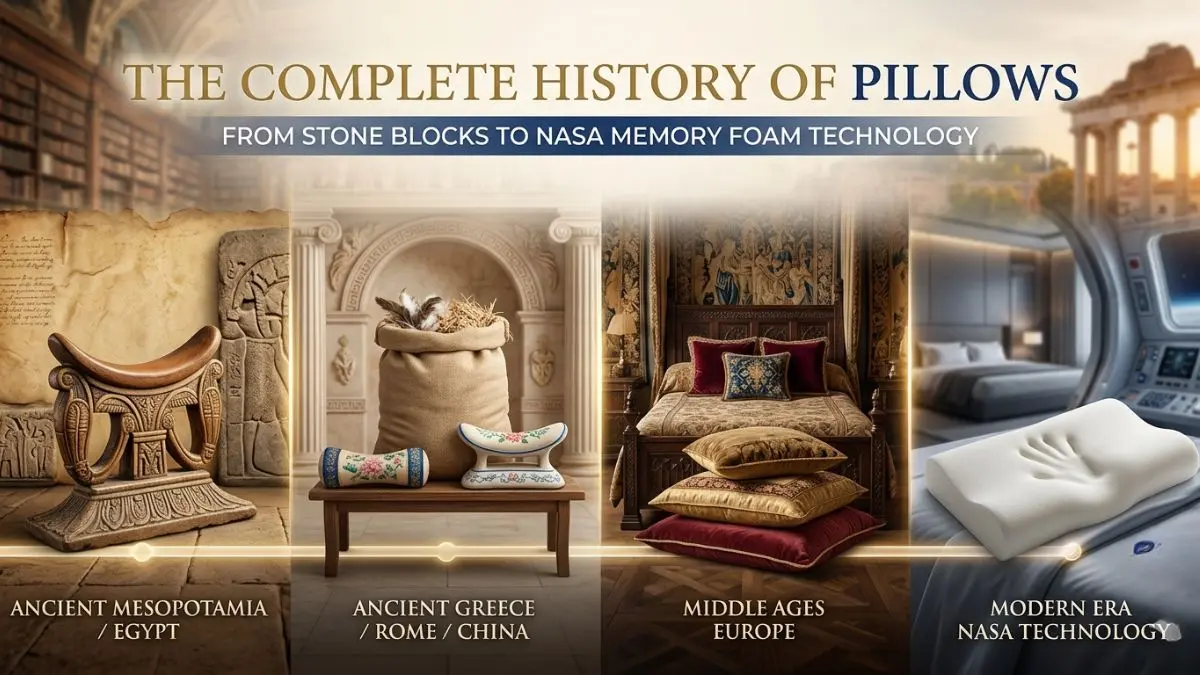
The Complete History of Pillows: From Stone Blocks to NASA Memory Foam Technology
Who Invented the Pillow?
Pillows were invented around 7000 BCE in ancient Mesopotamia, making them about 9,000 years old. No single person invented the pillow, but the ancient Sumerians created the earliest stone pillows to support and protect the head during sleep.
We often take pillows for granted while sleeping, but the history of this innocent object dates back thousands of years. They weren’t always as soft and delicate as we see them today. From stone to feathers, the pillow’s journey tells the story of the evolution of human civilization.
So the question is: who invented the pillow, and why did early humans decide to place something under their heads?
Quick Facts About Pillows
- Oldest known pillow: Around 9,000 years old
- First pillow material: Stone
- First civilization to use pillows: Ancient Mesopotamia (modern Iraq)
- First soft pillows: Ancient Greece and Rome around 200 BCE
- Memory foam invention: 1966 by NASA engineers
- Global pillow market value (2024): About $15 billion
- Most expensive pillow ever sold: $50,000 Hefel T4000 pillow
- Smart pillow market growth: Around 27–30% every year
The First Pillows in Mesopotamia (7000 BCE)
The World’s First Pillow Was Hard: The earliest pillows came from ancient Mesopotamia, located in modern-day Iraq. Archaeologists discovered stone pillows shaped to support the neck and head.
These were not soft cushions. They were carefully carved stone supports.
Pillows Were Made for Survival: Ancient people faced many dangers while sleeping. They often slept on the ground, where insects and scorpions moved freely.
Stone pillows helped in several ways:
- They kept bugs away from the face and hair
- They raised the head for easier breathing
- They reduced contact with damp ground
At that time, pillows were survival tools, not comfort items.
Pillows Showed Wealth: Only rich people could afford stone pillows because carving stone required time and skill. Wealthy families owned several decorated pillows to display their social status.
This made the Mesopotamian pillow one of the first luxury bedding products in history.
Must Read: The Complete History of Fans: From Ancient Cooling to Modern Smart Ceiling Fans
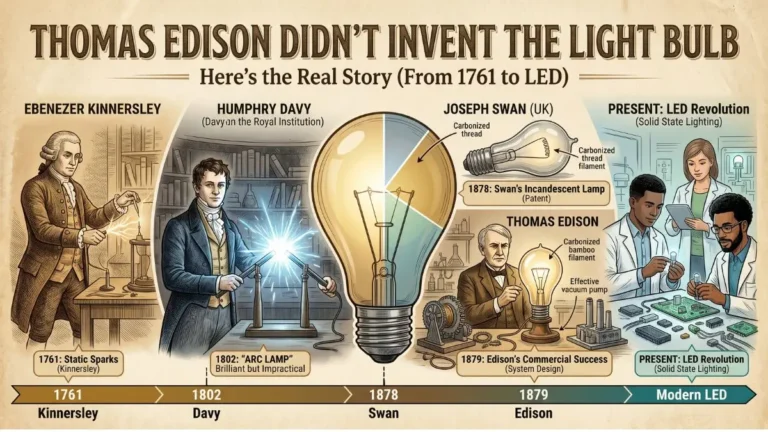
Must Read: Thomas Edison Didn’t Invent the Light Bulb. Here’s the Real Story (From 1761 to LED)
Ancient Egypt: Pillows and Spiritual Protection
Egyptians Believed the Head Was Sacred: Ancient Egyptians believed the head was the center of life and spiritual power. Protecting the head also meant protecting the soul.
Egyptian headrests date back to around 2055–1985 BCE.
Materials Used in Egyptian Pillows: Egyptians made pillows from:
- Stone
- Wood
- Ivory
- Ceramic
Most Egyptian pillows had a flat base, a vertical support, and a curved top for the neck.
Spiritual Symbols on Pillows: Egyptians decorated pillows with carvings of gods and protective symbols.
Common images included:
- Bes, protector against evil spirits
- Taweret, goddess of protection and childbirth
- Sacred writings and magical spells
People believed evil spirits could attack during sleep, so pillows acted like spiritual protection.
Pillows Were Buried with the Dead: Egyptians placed pillows inside tombs. Archaeologists found eight headrests inside the tomb of King Tutankhamun.
Some burial texts described pillows as symbols of rebirth and protection in the afterlife.
Rare Soft Egyptian Pillow: Most Egyptian pillows were hard, but archaeologists discovered one rare plant-fiber pillow from Sedment el-Gebel. This suggests some lower-class Egyptians used softer homemade pillows.
Ancient China: Hard Pillows and Health Beliefs
Chinese Philosophy Preferred Hard Pillows: Ancient Chinese people believed soft pillows weakened the body’s energy, known as qi. Hard pillows represented strength and health.
Even though they could make soft pillows, many people chose hard ones.
Popular Chinese Pillow Materials
Chinese pillows were made from:
- Porcelain
- Jade
- Bamboo
- Wood
- Bronze
People believed different materials improved health in different ways.
Beautiful Ceramic Pillows
Chinese ceramic pillows often featured:
- Flowers and animals
- Religious teachings
- Dragons and protective creatures
Today, collectors pay thousands of dollars for these ancient pillows.
The First Wellness Pillows
China also created medicinal pillows filled with herbs. People believed these pillows could improve sleep, health, eyesight, and even hair color.
Modern aromatherapy pillows follow a similar idea today.
Japanese Geisha Pillows
Japanese Geisha used a special hard pillow called the takamakura.
It supported only the neck while keeping the hairstyle untouched during sleep. Geisha hairstyles took many hours to create, so they needed a way to protect them overnight.
Some Geisha even placed rice around the pillow so noise would wake them if they moved too much.
Greece and Rome: The Rise of Comfort
Soft Pillows Became Popular: Ancient Greeks and Romans changed the idea of sleep comfort. They believed sleep should feel pleasant.
For the first time, softness became important.
Pillow Materials in Greece and Rome
People filled pillows with:
- Feathers
- Down
- Straw
- Wool
- Animal hair
Rich Romans often used several pillows while eating, resting, or sleeping.
Pillow Fights May Have Started in Rome
Historians believe pillow fights may have started in ancient Rome after soft feather pillows became popular.
Spartans Rejected Comfort
The Spartans believed hard sleeping conditions built strength and discipline. They saw soft pillows as signs of weakness.
The Middle Ages: Soft Pillows Became Unpopular
Comfort Was Seen as Weakness: After the fall of Rome, many religious leaders viewed comfort as sinful luxury. Soft pillows became symbols of laziness and moral weakness.
King Henry VIII Restricted Pillows
In 16th-century England, King Henry VIII reportedly banned soft pillows for ordinary people.
Only these groups could use them:
- Pregnant women
- Royal families
This was one of the earliest examples of a government controlling comfort products based on social class.
The Industrial Revolution Changed Everything
Pillows Became Affordable: During the 1700s and 1800s, factories and textile machines made pillow production much faster and cheaper.
Ordinary families could finally own comfortable pillows.
Sleep Became About Comfort: People slowly stopped seeing sleep as only survival. They began viewing rest as important for health, comfort, and recovery.
The 20th Century: Science Improves Pillows
Polyester Filling Arrived: In the 1960s, polyester filling became popular because it:
- Kept its shape longer
- Resisted mold and insects
- Lasted longer than natural materials
Polyester quickly became one of the most common pillow fillings.
NASA and Memory Foam
In 1966, NASA engineer Charles Yost created memory foam to protect astronauts from strong pressure during space travel.
Later, companies used this technology for mattresses and pillows.
Memory foam became popular because it:
- Shapes itself to the head and neck
- Reduces pressure points
- Supports spinal alignment
- Improves comfort
Modern Pillows and Sleep Technology
Many Pillow Types Exist Today
| Pillow Type | Best Feature |
|---|---|
| Memory Foam | Pressure relief |
| Down & Feather | Softness |
| Latex | Durability |
| Cooling Gel | Temperature control |
| Buckwheat | Breathability |
| Cervical Pillows | Neck support |
| Bamboo | Eco-friendly materials |
Specialized Health Pillows
Today, companies make pillows for specific needs:
- Anti-snoring pillows
- Pregnancy pillows
- Acid reflux pillows
- Orthopedic pillows
- Sensory pillows
Many of these products are based on medical research.
The Future of Pillows
Smart Pillows Are Growing Fast: Modern smart pillows can:
- Monitor sleep quality
- Detect snoring
- Track heart rate and breathing
- Adjust temperature automatically
- Connect with mobile apps
Some AI-powered pillows can even move the sleeper’s head to reduce sleep apnea.
Scientists Are Testing New Materials
Researchers are studying:
- Graphene cooling materials
- Temperature-changing fabrics
- Biodegradable fillings
- Smart moisture-sensitive fabrics
Future pillows may become even more advanced.
Interesting Pillow Facts from Around the World
Viking Pillows: Vikings used eider duck feathers, one of the rarest and most expensive pillow fillings today.
Aboriginal Australian Sleeping: Some Aboriginal Australian groups rested their heads on wooden supports or their own arms instead of separate pillows.
Ottoman Symbolism: In Ottoman culture, sending someone a pillow could symbolize execution or death.
Etruscan Stone Pillows: Ancient Etruscans carved stone pillows directly into tombs and sarcophagi.
Pillows in Religion and Literature
The Bible: The Bible mentions pillows several times. In Genesis, Jacob slept with a stone under his head.
Greek Mythology: Greek gods of sleep were often shown resting on soft clouds, symbolizing comfort and rest.
Shakespeare: In Shakespeare’s works, pillows often symbolized sleep, guilt, peace, or morality.
Conclusion
The history of pillows reflects the history of human civilization itself. People first used pillows for survival. Later, cultures connected them with religion, status, morality, and comfort. Today, science and technology shape pillow design more than ever before.
Modern pillows now combine comfort, health research, artificial intelligence, and sleep science.
From ancient stone blocks in Mesopotamia to smart AI-powered pillows, this simple object has traveled through 9,000 years of human history.
Tonight, when you place your head on a pillow, you are using an invention shaped by thousands of years of culture, science, and human creativity.
FAQs
When were pillows invented?
Pillows were invented around 7000 BCE in ancient Mesopotamia. That makes them nearly 9,000 years old. The first pillows were made from stone.
Who invented the pillow?
No single person invented the pillow. Ancient Sumerians in Mesopotamia created the earliest known pillows.
What were the first pillows made of?
The first pillows were made completely from stone. Later, people used wood, ivory, bamboo, feathers, cotton, and memory foam.
Why did ancient people use stone pillows?
Stone pillows helped keep insects away from the head, improved breathing, and reduced contact with wet ground.
When did soft pillows become popular?
Soft pillows became common among rich Greeks and Romans around 200 BCE. Ordinary people gained access to them after the Industrial Revolution.
How long should a pillow last?
Most experts suggest replacing pillows every 1–2 years. Memory foam pillows may last up to 3 years.