
Real History of Zipper? Result of 20 Years of Failure and Continuous Hard Work
Who Invented the Zipper? The zipper was originally conceptualized by Elias Howe (1851), and Whitcomb Judson (1893) created the first model, but it flopped. Real success came in 1913 with Gideon Sundback, who invented the final, sleek design of the modern “separable fastener” (zipper).
Today, we zip up our jeans, bags, and jackets without any thought. But have you ever thought how this simple thing was invented? The story of the zipper wasn’t an overnight success, it is the result of 20 years of failure and constant hard work. Initially no one was ready to buy it.
Before the Zipper: A World of Buttons, Hooks, and Frustration
In the late 1800s, people spent a lot of time getting dressed. They fastened shoes with many small buttons and used a special hook tool to close each one. Some boots had up to twenty buttons around the ankle. Women closed corsets and dresses with many more buttons. People often spent a long time getting ready each morning.
People also used hooks and eyes, small metal fasteners that connected together. But these fasteners were hard to use, opened easily, and did not hold securely. People needed something faster, easier, and better. The question was, what could replace them?
Who Invented the Zipper? The Hidden History
Elias Howe Jr.: The Man Who Almost Invented It First
Elias Howe Jr. came very close to inventing the zipper first. His story is one of history’s biggest missed chances.
People know Howe (1819–1867) mainly for inventing the sewing machine. This machine changed the clothing industry and made him one of the most famous inventors of the 1800s. But in 1851, he also received a patent for another invention called an “Automatic, Continuous Clothing Closure.” This device was made to keep clothes closed automatically and may have been the earliest version of the zipper.
However, Howe did not continue working on it.
Historians believe he was too busy with his sewing machine business. The sewing machine was already making him successful, and he spent much of his time protecting those patents. He likely did not want to risk time and money on a new invention that had not yet proven itself.
Because of this, Howe never sold the clothing closure device, never improved it, and never turned it into a useful product. He died in 1867.
By not developing his 1851 invention, Howe lost the chance to be remembered as the first zipper inventor.
Whitcomb L. Judson: The Man With the First Big Idea
Whitcomb Leonidas Judson, a Chicago inventor born around 1844. Judson was not a careful, methodical scientist. He was an enthusiastic idea machine — a man who held patents on everything from pneumatic street railways to grain-handling equipment. He loved solving problems, even if his solutions were sometimes more ingenious in theory than in practice.
Judson invented the zipper because he was tired of bending down to button his shoes. Whether or not that is literally true, the problem he set out to solve was real. How do you create a fastener that is quick, easy, and secure?
In 1891, Whitcomb Judson filed a patent for a device called the “Clasp Locker or Unlocker for Shoes.” It used a sliding tool that connected a row of hooks and eyes in one hand movement. He received the patent in 1893. That same year, he showed the invention at the World’s Columbian Exposition in Chicago, a famous world fair in American history.
The public showed interest, but they were not impressed enough to buy it. Judson’s device was bulky, often opened at the wrong time, and manufacturers found it hard to make properly. He sold only twenty units, and the U.S. Postal Service bought all of them for mail bags, not clothing.
Judson did not give up. He worked with businessman Colonel Lewis Walker and started the Universal Fastener Company, which later became the Automatic Hook and Eye Company. Together, they kept improving the design, filed new patents, and released newer versions. Each version worked a little better, but none became popular with the public.
By the early 1900s, Judson’s fastener remained more of an interesting idea than a successful product. Someone still needed to turn it into a strong, reliable invention. That person arrived in 1906 from Sweden with engineering skill and careful attention to detail.
Gideon Sundback: The Engineer Who Changed Everything
Gideon Sundback was born in Sweden in 1880. He studied electrical engineering in Germany before moving to the United States in 1905.
His first job in America was with the Westinghouse Electric and Manufacturing Company in Pittsburgh. This respected position helped him build strong engineering skills.
In 1906, he joined the Universal Fastener Company. He later married Elvira Aronson, the daughter of the company’s plant manager. With his talent and hard work, he rose to become the company’s head designer.
Sundback also faced personal tragedy. Elvira died in 1911, leaving him a widower. Many accounts say he focused deeply on his work after her death. He spent long hours designing and improving fasteners, determined to solve the problem that Whitcomb Judson had not been able to fix.
And crack it he did — in stages.
Gideon Sundback made his first major breakthrough on April 29, 1913, when he patented the “Hookless Fastener No. 1.” Today, people celebrate that date as National Zipper Day.
Instead of using hooks and eyes, Sundback created a new system with interlocking teeth. Each tooth had a small dent on one side and a small bump on the other. When the slider moved upward, it pushed the two rows together and locked the teeth firmly in place. This created a strong, flexible, and smooth fastener.
He continued to improve the design. In 1914, he developed a better version called the “Hookless No. 2.” Historians now see this model as the design most similar to the modern zipper.
He also increased the number of teeth in each inch from four to ten or eleven. This made the zipper stronger and stopped it from opening by accident.
In 1917, Sundback received his final and most important patent for the “Separable Fastener.” This design combined all of his improvements into one practical product that factories could produce easily.
Gideon Sundback did more than improve the zipper design. He also invented a machine that could make zippers quickly and efficiently. He called it the “S-L” (Scrapless) machine.
The machine used a special Y-shaped wire. It cut small zipper teeth from the wire, shaped each tooth with a dent and bump, and then attached the teeth onto cloth tape to create a long zipper chain.
Within its first year, the S-L machine produced several hundred feet of zipper chain each day with almost no wasted material.
This invention was extremely important. Without a fast and low-cost way to manufacture zippers, the zipper might have remained an expensive product used only in limited markets instead of becoming common in everyday life.
Why Is It Called a “Zipper”? The Name Has a Surprising Origin
Many people think the zipper was always called a zipper, but that is not true.
For many years, people called it a “slide fastener” or a “hookless fastener.” The word zipper came later from a different source.
In 1923, the B.F. Goodrich Company began using Sundback’s fasteners on rubber boots and galoshes. The company president reportedly liked the sound the fastener made when closing — “zip!” Because of that sound, he named the boots “Zippers.” At first, this name referred only to the boots, not the fastener itself.
That same year, Sundback sold his design rights to engineer Martin Othmar Winterhalter. Winterhalter improved the tooth design by creating a smoother and more reliable locking system. This was another important step in the zipper’s development.
In the early years, companies mainly used slide fasteners on rubber boots and tobacco pouches. These practical products could benefit from the fastener even if it did not always work perfectly. Clothing companies needed more time before they trusted it.
Over time, people started using the name “zipper” for the fastener inside the boots. By the 1930s, the word became the common name for all slide fasteners. Today, “zipper” is one of many brand names that became everyday words.
How Does a Zipper Work?
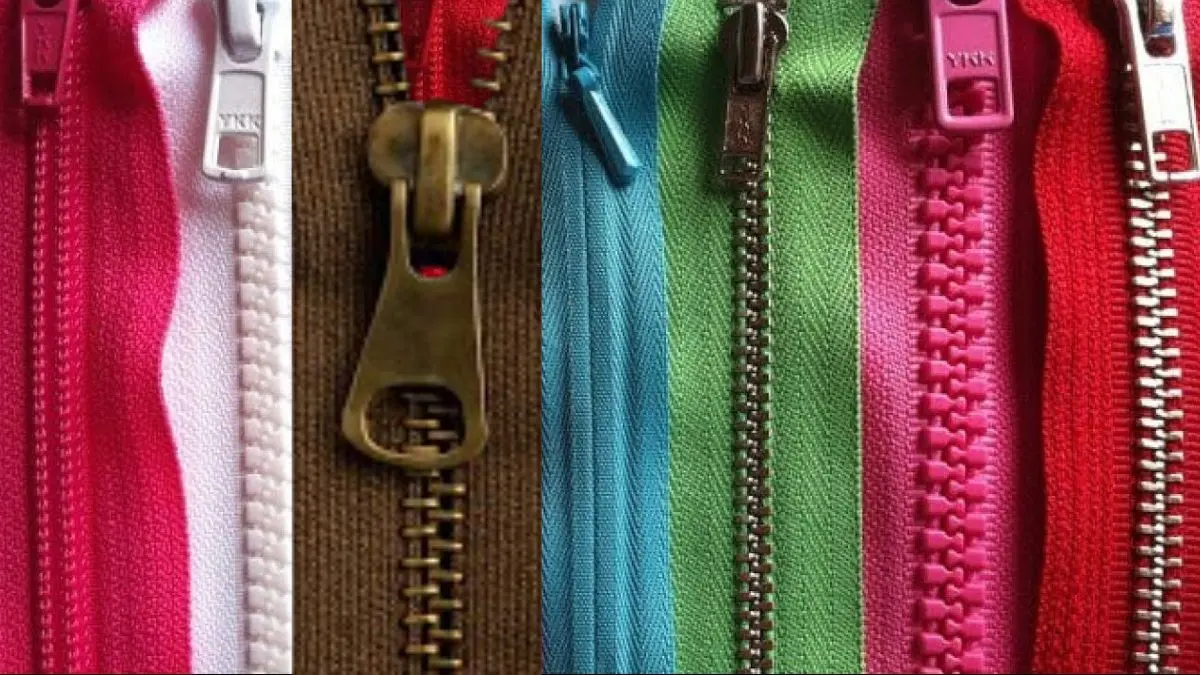
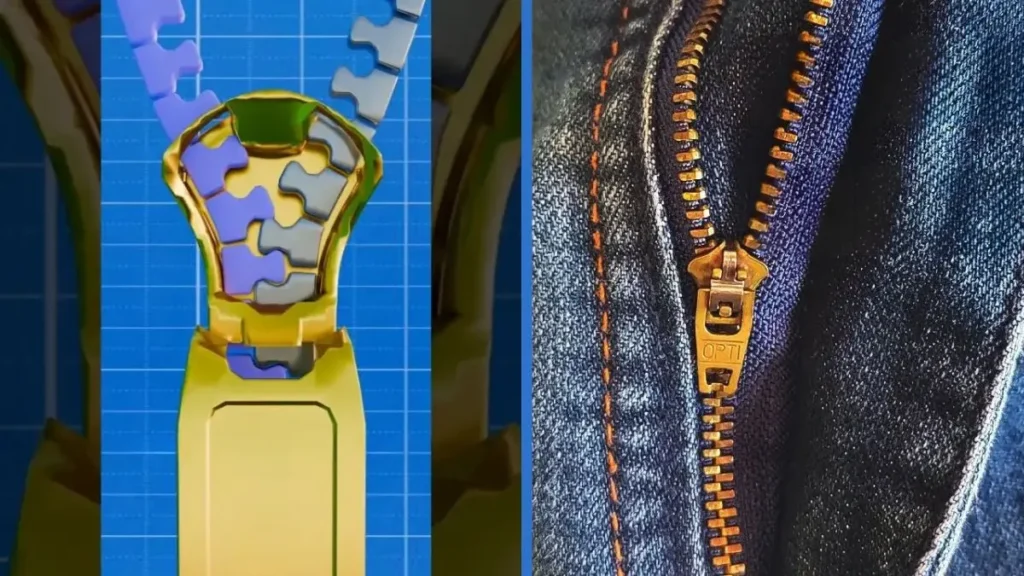
A zipper works in a simple but clever way. It has two rows of teeth, a slider, and stops that keep it in place. Some jacket zippers also have an insertion pin and retainer box at the bottom.
When you pull the slider up, it pushes the two rows of teeth together so they lock tightly. When you pull the slider down, it separates the teeth and opens the zipper.
The secret is the slider’s Y-shaped design, which lines up the teeth perfectly so they connect and come apart smoothly.
Modern zippers come in three main types:
- Metal zippers — strong and durable, used on jeans and jackets
- Plastic zippers — lightweight, often used in outdoor gear
- Nylon coil zippers — flexible, common in clothing and luggage
The Slow Rise of the Zipper
Even after the modern zipper was created in 1913, it did not become popular right away. Its success came slowly.
The Military Helped First
During World War I, the U.S. military used zippers in uniforms and gear because they were fast and practical. This helped people trust the invention.
Fashion Took Time
In the 1930s, zippers became popular in children’s clothes because they made dressing easier. Then designer Elsa Schiaparelli made zippers fashionable by using them in her designs.
The “Battle of the Fly”
In 1937, zippers became common in men’s pants, replacing button flies. After that, their popularity grew fast.
Everywhere by the 1940s
Soon zippers were used in jackets, luggage, tents, and sportswear. New nylon coil zippers made them lighter and cheaper.
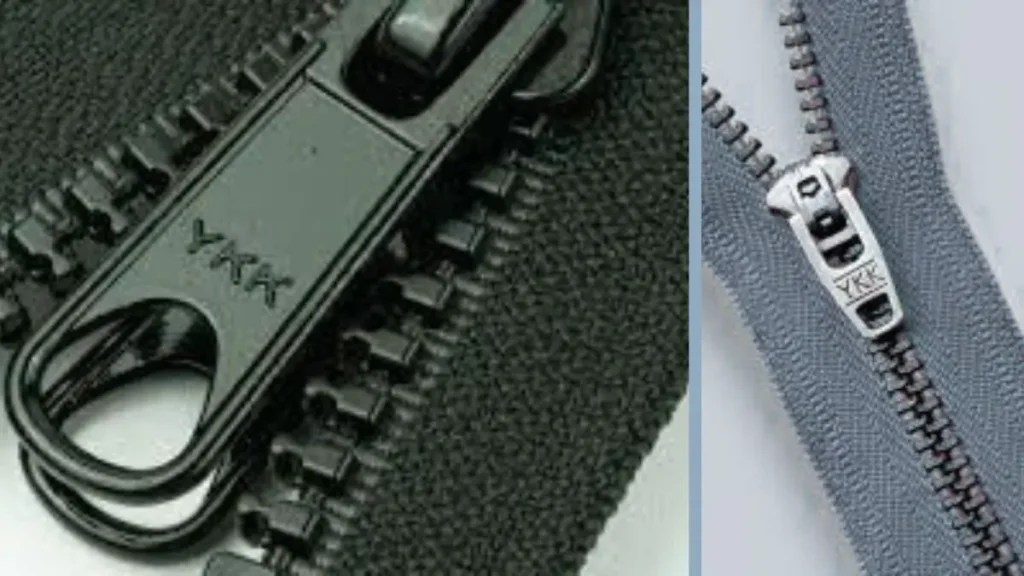
Today, billions of zippers are made every year. YKK makes about half of the world’s zippers.
YKK’s Big Role
Founded in Japan, YKK helped improve zipper quality and made zippers famous worldwide. The company followed a philosophy called “Cycle of Goodness,” believing business should benefit everyone.
Common Zipper Myths
Myth 1: One person invented the zipper
No — many inventors improved it over decades.
Myth 2: The zipper was invented in 1893
That was an early version. The modern zipper came in 1913.
Myth 3: It replaced buttons right away
No, it took many years to become common.
Why Zippers Still Matter
Zippers are still popular because they are:
- Reliable
- Simple to use
- Strong and versatile
- Still improving with new technology
From jeans to space suits, the zipper is everywhere.
A Small Invention with a Huge Legacy
The zipper may seem ordinary, but it took years of failure, invention, and hard work to perfect. Every time you zip a jacket, you’re using one of history’s smartest little inventions.