
Who Invented the Paper Clip? The Truth Behind a Global Mystery
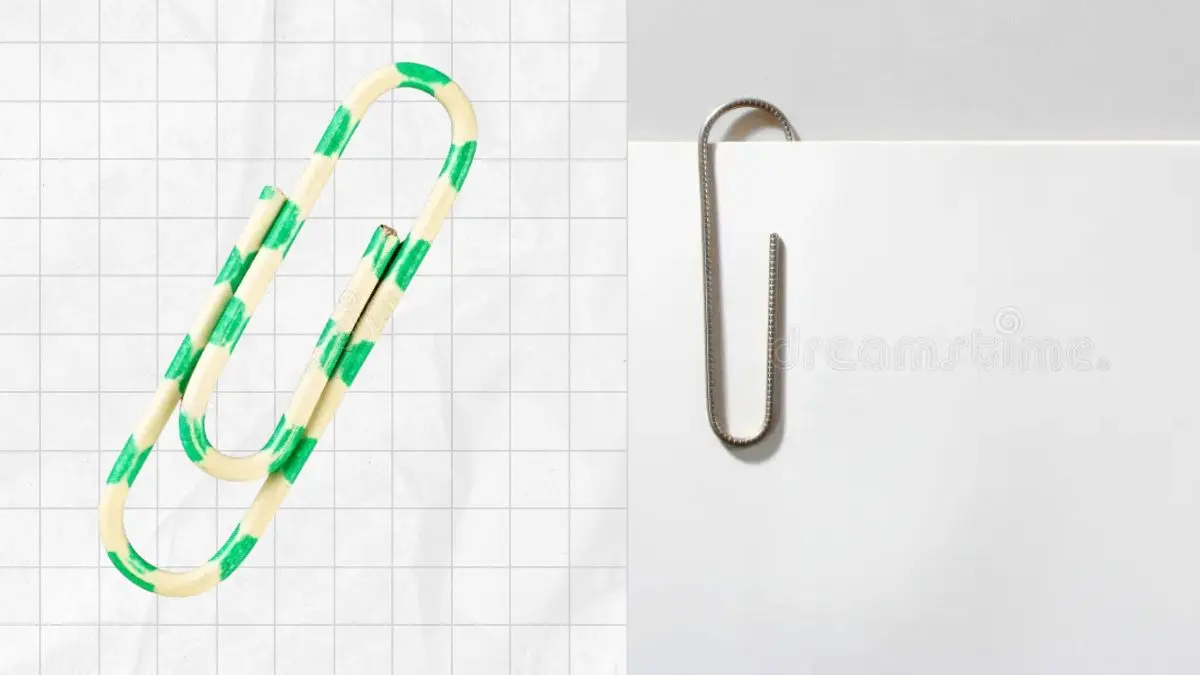
Mostly people believe that Norwegian Johan Vaaler (1866–1910) invented the paper clip in 1899. He even patented it, but his design was slightly different and was not as successful.
The history of the paper clip isn’t as simple as many believe. It was not invented by a single person. It gradually evolved through various designs throughout the 19th century. At that time, people were looking for a more convenient way to join papers together instead of using pins, ribbons, or wax.
So who invented the paper clip? The honest answer is, it is complicated. Here is the full story.
Who Invented the Paper Clip?
To understand who invented the paper clip, it’s important to know what people used before it. From the 13th century for nearly 600 years, people used three main methods to join papers:
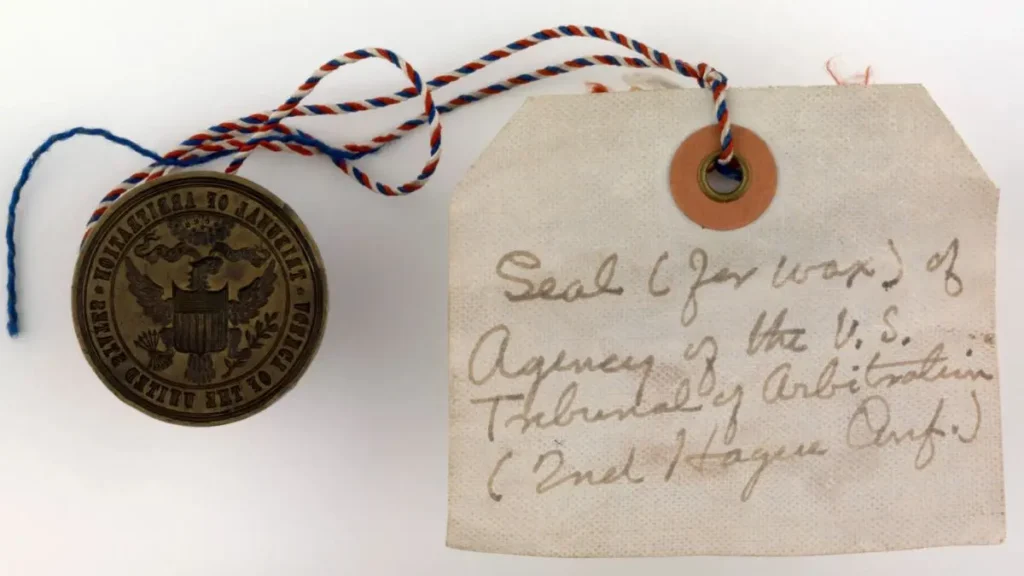
Ribbons: People made a small hole in the corner of the papers and passed a thread or ribbon through it, then tied a knot. To remove papers, they had to cut and tie the ribbon again every time.
Wax: Melted wax was poured over the ribbon to make it stronger, which made separating the papers even more difficult.
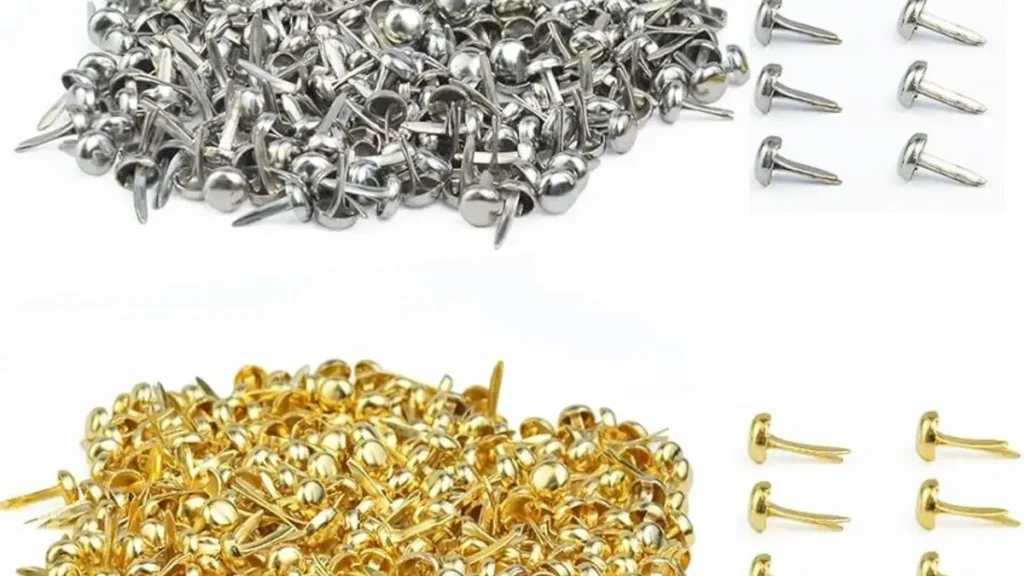
Pins: In 1835, John Ireland Howe invented a straight metal pin. It was better than ribbons, but it made holes in papers, could hurt fingers, and could easily fall out.
The First Big Invention: Samuel Fay (1867)
The first patent for something like a paper clip was not made by Johan Vaaler. It was actually filed almost 30 years earlier by an American inventor, Samuel B. Fay.
In 1867, he received U.S. Patent No. 64,088 for a bent wire device. He did not create it to hold papers. He designed it to attach price tags and labels to clothes in shops. But, his patent also mentioned that it could be used to hold papers. Because of this, it is considered first recorded paper clip–like invention.
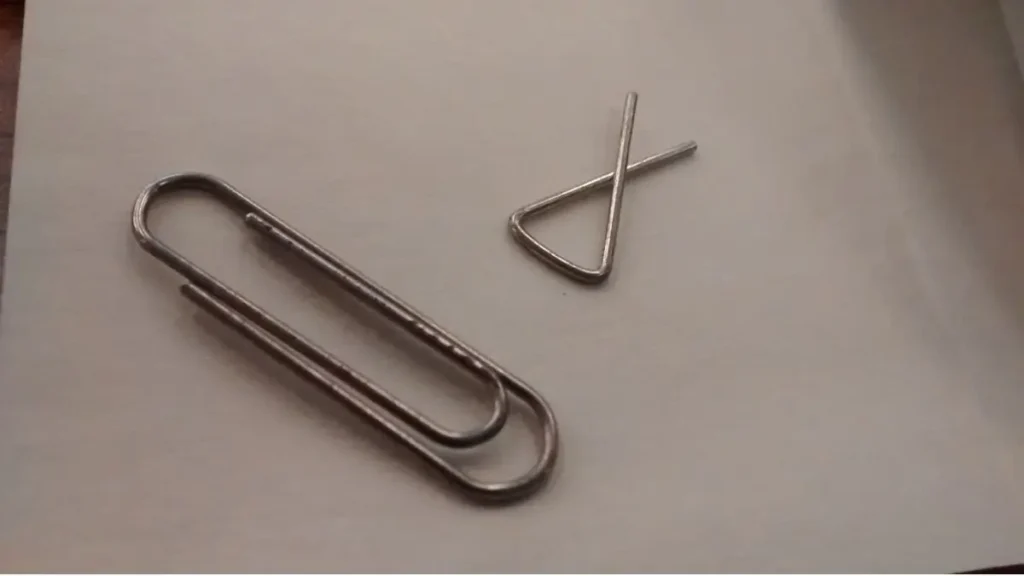
His design was different from the paper clip we use today. It was a simple bent wire, not the familiar double-oval shape. It was not popular for many years after it was invented. Historians have not found any ads or sales records for it until 1896, almost 30 years later.
In 1896, a New York distributor, D.S. Gorman started advertising a clip called the “Clinch,” based on Fay’s design. Around the same time, a company called Cinch Clip Co. in Buffalo also made a similar clip called the “Cinch.” After that, Fay’s design began to be sold under different brand names. In 1918, the American Clip Company even used the name “Fay” for a clip based on his design.
Samuel Fay’s work is important because it was the first patent. But, his design never became as popular or widely used as the paper clip designs that came later.
Must Read: Do You Know China Kept its Paper-Making Technology a Secret for 500 Years?
Must Read: Why Do Notebooks Have Margins? The Rat Story No One Tells You
Must Read: Who Invented the Ballpoint Pen? The 50-Year Struggle for a Leak-Proof Dream
Must Read: The Complete History of the Stapler from Luxury to Office Essential
Wright and Angell — Two More Early Patents
In 1877, Erlman J. Wright patented a paper clip. It was mainly advertised for holding newspapers, not regular office papers. Like Fay’s design, it did not look like the modern paper clip and did not become popular.
In 1889, Frank Angell patented another design. This became the third early version of a paper clip. It shows that many inventors in the late 19th century were trying to solve the same problem at the same time, but working separately.
However, none of these early designs turned into the standard paper clip we know today.
The “Gem” Clip (1892): The Design We Use Today
The paper clip we use today is called the Gem clip. It is a double-oval shape — one bigger loop and one smaller loop, made from a single piece of wire. It holds papers firmly from both sides. It is simple, strong, cheap to make, and very easy to use.
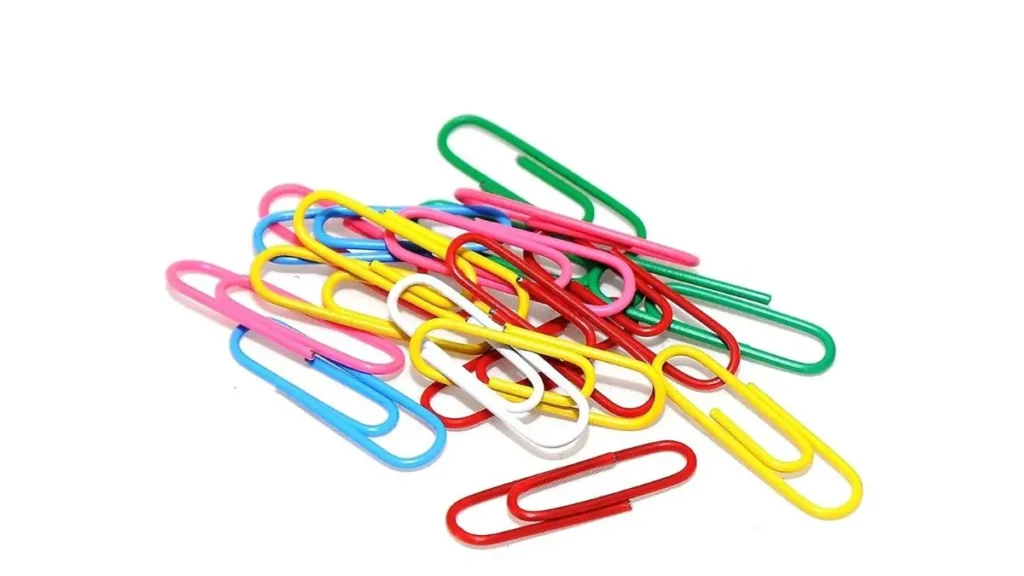
The Gem clip was introduced in 1892 and advertised in 1893. In 1904, the company Cushman and Denison applied for a trademark for the Gem name and said they had been using it since 1892. Later, in a 1922 advertisement, they clearly said that they had introduced the first Gem clip thirty years earlier.
One surprising fact is that the Gem clip was not patented. No one knows who actually invented this double-oval design. There is no clear patent record. Maybe the design was too simple to patent, or the records were lost, or the inventor never applied for a patent. Whatever the reason, the most successful paper clip in history has no known inventor.
What made the Gem clip special was its smart design. It uses the natural spring of the bent wire to hold papers tightly from both sides. It is easy to put on and easy to remove. It does not tear or damage the paper. It works so well in every way, that no other design could compete with it. So, it became the most popular paper clip in the world.
William Middlebrook (1899): — The Machine That Made Them
The inventor of the Gem clip shape is unknown, but another important invention is clearly recorded. In 1899, an American inventor named William Middlebrook from Connecticut created a machine that could make paper clips automatically.
His machine took wire from a spool, bent it into the double-oval Gem shape, and cut it to the right size. This process made finished paper clips quickly and continuously.
Later, Middlebrook sold his patent to Cushman and Denison, the same company that was already selling the Gem clip.
Middlebrook did not invent the paper clip design, but he made it easy to produce in large numbers. Without his machine, paper clips might have stayed rare and expensive. Because of his invention, millions of paper clips could be made at a very low cost. His invention made paper clips affordable for offices, schools, and homes.
In simple words, Middlebrook’s role in the history of the paper clip is just as important as the unknown person who created its design.
Johan Vaaler: The Norwegian Hero
Johan Vaaler was born on March 15, 1866, in Norway. He studied science, mathematics, and electronics, and started working as a patent examiner in 1892. Later, he became an office manager and worked there until his death in 1910 at the age of 43. His career was closely connected to inventions and patents.
In 1899, he filed a patent in Germany for a paper clip made from bent wire. At that time, Norway did not have its own patent laws. In 1901, he also received a similar patent in the United States. People knew him as a creative and innovative person.
But, there is an important issue. His design was not the same as the modern Gem paper clip. His design was a simple flat loop, often rectangular or triangular in shape. It did not have the double-oval shape that makes today’s paper clip work so well. In fact, the Gem clip had already been in use for about seven years before Johan Vaaler applied for his patent.
His design also had practical problems. It was hard to insert paper into his clip, and it did not hold papers tightly. Instead of lying flat like a modern paper clip, it would stick out from the paper, making it less useful. Because of these issues, it was never produced or sold commercially.
He received his patents because patent systems at that time were more flexible and allowed small changes to be patented. It is also not clear why he filed his patent in other countries. He may have wanted international rights, or he may have known that Norway’s market was too small.
In the end, his patents expired without much attention. Gem clip became popular all over the world, even in Norway. Johan Vaaler died in 1910 without gaining success or recognition for his paper clip during his lifetime.
Many people ask: if Johan Vaaler’s design was not successful and the widely used clip was of unknown British origin, why Johan Vaaler was known as the inventor of paper clip?
The answer lies in World War II and the power of national stories.
During the German occupation of Norway from 1940 to 1945, Norwegians used the paper clip as a symbol of unity and peaceful resistance. It became a quiet but meaningful signal to wear a paper clip on the coat or shirt. It was visible to those who understood it, but harmless enough to avoid punishment. It showed: we are united and support each other. Reportedly, the German authorities banned the wearing of paper clips at one point, which made the symbol even stronger.
After the war, the paper clip became a powerful symbol of Norwegian unity and resistance. In this patriotic atmosphere, the story of Johan Vaaler — a Norwegian inventor of a paper clip — became very popular. From the 1950s, Norwegian reference books listed him as the inventor of the paper clip. This idea then spread to international dictionaries and widely accepted.
But, this belief was based on a misunderstanding — that Johan Vaaler’s design was the same as the Gem clip, and that he deserved credit for it. But historians later found that this was not true. Johan Vaaler’s design was different, less effective, and was never produced. The Gem clip was a separate invention by an unknown designer and already existed before Johan Vaaler filed his patent.
In Johan Vaaler’s honor, a large paper clip statue was built in Sandvika near Oslo. Norwegian students were also taught that he invented the paper clip. The national pride was real, even if the historical facts were not fully correct.
Why Every Attempt to Improve the Paper Clip Has Failed
The Gem clip design is unchanged for over 130 years. Lots of attempts have been made to improve it—but most of them have failed.
Thousands of paper clip patents have been filed in the 20th and 21st centuries. There have been triangular clips, clips with plastic color-coded coatings, clips with teeth for better grip, magnetic clips, and even biodegradable plant-based clips. Every few years, an inventor claims to have created a better paper clip than the Gem. But, none of them has replaced it as the standard for everyday use.
The binder clip does work better than the Gem clip for holding thick stacks of paper. Its folding arms provide much stronger clamping force. But for normal documents, the 130-year-old double-oval wire design is still the most widely used. Its simplicity, reliability, low cost, and easy manufacturing have made it almost impossible to beat.
FAQs
Who invented the paper clip?
The first patent for a paper clip was filed by Samuel B. Fay in 1867, but his design was not the modern Gem shape. The Gem clip—the double-oval design used globally today—was introduced in 1892 by what later became Cushman and Denison, but it was never patented, and its inventor is unknown. Johan Vaaler of Norway is often credited, but his 1899 design was different, and never manufactured.
Did Johan Vaaler really invent the paper clip?
Vaaler patented a paper fastening device in 1899, but his design was a flat loop, not the double-oval Gem shape. The Gem clip had already been on the market for about seven years before Vaaler filed his patent. His design was never manufactured or sold. Most historians do not credit him with inventing the paper clip as we know it today.
What is the Gem paper clip?
The Gem is the double-oval wire paper clip that has been the global standard since the early 1900s. Introduced in 1892 and never patented, its inventor is unknown. Its double-loop structure uses the torsion principle of bent wire to grip paper firmly without piercing it.
Who invented the paper clip manufacturing machine?
William Middlebrook of Waterbury, Connecticut, patented an automatic paper clip manufacturing machine in 1899 under U.S. Patent No. 636,272. He sold the patent to Cushman and Denison, making mass production of the Gem design economically viable.
Who was Samuel Fay?
Samuel B. Fay was an American inventor who received the first paper clip patent—U.S. Patent No. 64,088—in 1867. His designed it to attach tickets to fabric, but his patent also recognized its use for papers. His design was not the Gem shape and had no significant commercial success until 1896.
Why is the paper clip a symbol in Norway?
During the German occupation of Norway from 1940 to 1945, Norwegians wore paper clips on their lapels as a quiet symbol of national solidarity and resistance. The symbol gained additional meaning from the mistaken belief that Johan Vaaler—a Norwegian—had invented the paper clip.
Conclusion
The paper clip is one of the most successful inventions ever—unchanged for over 130 years. The story of the paper clip shows that even the simplest objects can have complex histories. It was not invented by a single person, but shaped by multiple ideas, designs, and innovations over time. From Samuel Fay’s early patent to the unknown creator of the Gem design and William Middlebrook’s manufacturing machine, each played a role in making the paper clip what it is today.