
Why Do Notebooks Have Margins? The Rat Story No One Tells You
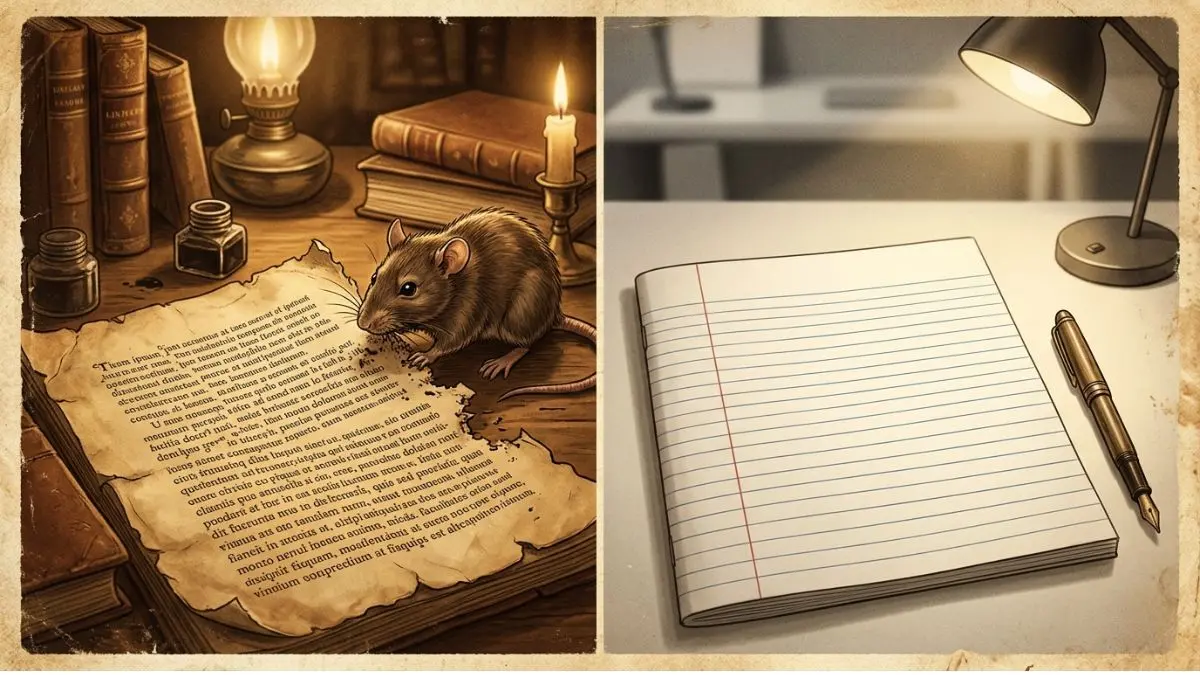
We have all used notebooks since childhood, and we often see a red or blue line on the side called a margin. Margins were not created to make handwriting neat or to give space for corrections. They were not meant to improve discipline or organization. Their purpose was more practical and goes back to very old times.
So, who invented notebook margins? And why do almost all notebooks still have them today. Here is the full and interesting history of notebook margins.
Who Invented Notebook Margins? Full History
Before Margins, There Was Paper — And Its Story Is Amazing
You cannot talk about notebook margins without first talking about paper, because both are closely connected.
Historians believe the earliest form of paper was made around 3500 B.C. in ancient Egypt. Egyptians used a tall plant called papyrus that grew near the Nile River. They cut the plant into thin strips, pressed them together, and dried them into flat sheets. The word paper comes from the word papyrus.
But papyrus had problems. It was weak, mostly found in one region, and hard to produce in large amounts.
The real breakthrough came around 105 A.D. in China. A man named T’sai Lun, who worked in the emperor’s court, created something much closer to modern paper.
According to history, he got the idea by watching a wasp build its nest. The wasp chewed plant fibers and made thin layers. T’sai Lun copied this idea using tree bark, bamboo fibers, and old cloth. He crushed them into pulp, pressed it flat, dried it, and made the first standard paper sheet.
This invention made him rich and famous. Sadly, later he became involved in a court scandal, was sent to prison, and died after taking poison.
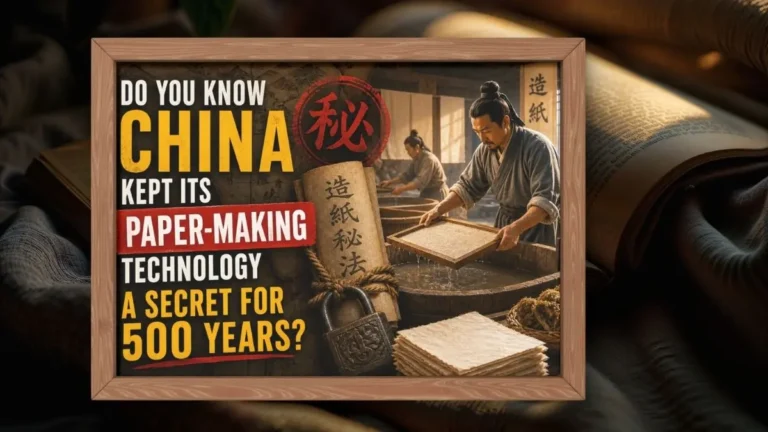
For many years, China kept papermaking a secret. In the 8th century, Arabs learned the method after winning a war against China. They brought it to Spain, and by the late 1300s, paper making had spread to Europe.
In the 19th century, people discovered paper could be made from wood pulp, which is how most paper is made today.
Full-Page Writing
To understand why notebook margins were invented, you first need to know how people wrote before margins existed.
In the past, paper was very expensive. In medieval Europe, one sheet of good paper could cost as much as several days’ wages. Parchment, which was made from animal skin, was even more expensive. Making a single book could require many animal skins, so only rich people, churches, or kings could afford it.
Because paper was so costly, people did not want to waste any space. Writers used every part of the page. They wrote from edge to edge, top to bottom, with no empty space. The margins we see today did not exist. Any blank space was seen as waste unless it was used for decoration in special books.
When printing started in Europe after Johannes Gutenberg invented the printing press in the 1450s, early books followed the same style. The pages were full of text with almost no empty space because paper was still expensive.
Later, in the 16th and 17th centuries, printing improved and paper became a bit cheaper. At that time, books started to include small margins. But these were mainly for better appearance and easier reading, not for practical use.
For everyday people—like students or writers—this change came much later. Even into the 19th century, most people still wrote on the entire page without leaving space. If you had paper, you used all of it.
The Rat Problem — Why Margins Were Actually Invented
Here is the truth that almost nobody knows, notebook margins were invented to protect written text from rats.
In the 18th and 19th centuries, buildings were not as strong or closed as today. Homes, schools, and offices had gaps in walls and cracks in floors. Because of this, rats were very common, especially in big cities like London, Paris, New York, and Philadelphia. They could easily move inside buildings, mostly at night.
Rats eat almost anything, even paper. They usually bite the edges of paper because it is easy to reach and also helps keep their teeth short.
This caused a big problem for people who kept important papers—like shopkeepers, students, clerks, and lawyers. If papers were left on a shelf overnight, rats could chew the edges and damage the writing.
So, a simple idea was used: leave some space empty on the side of the page. This empty space (margin) worked like a safety area. If a rat chewed the edge, only the blank part would be damaged, and the main writing would stay safe.
According to this idea, margins were not made for neatness or teachers. They were like protection for the writing. The margin acted as a safety zone—empty space used to protect important text.
Note: Important Points
- Some people question the rat story. If margins were made because rats chewed paper, then why are there side margins only? Rats could also chew from the bottom.
- Lawyers used the margin space for notes and comments. Because of this, yellow legal pads with wide margins became popular.
- There is a common belief that blue lines fade in photocopies or Xerox copies. That is why notebook lines are often blue, so copied pages look cleaner.
- When reading a book or notebook, people often hold the page with their thumb. Margins help keep fingers, sweat, or marks away from the text.
- Sources mentioned that around 23 billion margined pages are still printed every year worldwide.
- In the 8th century, Arabs learned papermaking after winning a war against China. They then brought the knowledge to Spain, helping paper spread to Europe.
- Some sources give credit to S.M. Clark for helping create modern lined paper.
- World produces 280 million pounds of paper per year.
Standardization and the Red Margin Line
When people started leaving space on the side of the page, the lack of standard became other problem. Everyone made margins in their own way. Some people drew a light pencil line, while others just guessed the space. Because of this, margins were different on every page.
This became an issue when notebooks started being made in factories in the mid-1800s. Earlier, notebooks were handmade, but now they were printed and sold in shops. So, companies needed a fixed and uniform design.
The solution was simple, print a straight vertical line on each page. This line showed where the margin ends and where writing should begin. It made all notebooks look the same and helped people write neatly.
But why was this line red?
The reason is practical and historical. Red ink was cheap and easy to see. It stood out clearly against black or blue writing, so people could easily follow the margin line. In older handwritten books, red ink was used to highlight important parts like headings. So using red for the margin line continued that old tradition.
By the late 1800s, the red margin line became standard. Most notebooks in Europe and North America had a red line about one inch from the left side—and this design is still used today.
Who Actually Invented It? The Mystery of Attribution
No single person invented notebook margins. They slowly became standard in notebooks during the mid-to-late 19th century, and nobody took credit for it.
Different companies were producing lined notebooks with printed margins by the 1870s and 1880s, but none filed patents for the margin. The margin was too obvious, too incremental, or too derivative of existing manuscript practices to be patentable.
By the 1890s, the red margin line was standard in notebooks produced by major American stationery companies, Roaring Spring, Mead, and National Blank Book Company — the predecessors of today’s major notebook manufacturers. British and European manufacturers adopted the same convention around the same time.
So, notebook margin was not invented by single person but it was standardized by an industry. It evolved from a practical handwritten convention into a mass-produced design without anyone claiming ownership of idea.
This made the notebook margin most ubiquitous design in the world. Billions of notebooks printed with red margin lines every year — for which no individual inventor can be credited.
The Other Reasons Margins Became Useful
Notebook margins were first introduced to stop rats from eating the paper, but they quickly became useful for other purposes too.
Teacher corrections and comments
In the early 1900s, teachers started using the left side of notebooks to write marks, corrections, and comments. The empty space in the margin slowly became a place for feedback. That’s why many students think this was the original purpose.
Binding protection
When pages are put into notebooks or binders, the left edge is close to the binding. If you write too close to it, the words can become hard to read or even get hidden. So, margins keep writing away from the binding area.
Hole-punch space
Later, schools started using binders with holes on the left side. If writing is too close to the edge, hole punching can damage it. Margins protect the writing from being cut or lost.
Neat and easy reading
Margins also make pages look clean and easy to read. Without margins, text feels crowded. The empty space makes writing more organized and comfortable to read.
Notes and extra writing
Students and researchers also use margins to write extra notes, questions, or small reminders. A famous note-taking method even teaches students to use the left side for keywords and ideas.
So, over time, margins became useful for many reasons—not just one original purpose.
When the Original Problem Disappeared
By the early 1900s, the rat problem that first caused notebook margins was mostly fixed in developed countries. Better buildings with strong walls, closed windows, concrete floors, and sealed foundations made it harder for rats to get inside homes, schools, and offices. Rat poisons and city pest control programs also helped reduce rats.
Paper storage also improved. Filing cabinets with drawers replaced open shelves, and papers were kept in folders and binders that protected the edges. Offices became cleaner and better organized.
By the 1920s and 1930s, rats chewing paper edges were no longer a big problem in industrialized countries. But notebook margins stayed. They had become common and useful for many other reasons. People used them for notes, corrections, and keeping writing neat. Binders, hole punches, and school systems also depended on them.
So, even after the rat problem ended, margins remained an important part of notebook design.
Global Variations in Margin Standards
The red margin line on the left side of notebook pages is common around the world, but some countries use different styles.
Right-to-left languages: In places where people write from right to left, like Arabic, Hebrew, and Urdu, notebooks often have the margin on the right side instead of the left. This matches the writing direction.
Wider margins in Europe: In some European countries, especially Scandinavia and Germany, notebooks often have wider margins than the usual one-inch margin used in the US and UK.
Japanese and East Asian notebooks: Japanese notebooks may have margins along with extra lines to help write kanji characters neatly. Some older Japanese notebooks for vertical writing have margins at the top instead of the side.
Grid notebooks: In countries like France and Germany, squared or graph-style notebooks are common. These may show the margin with a thicker or colored grid line instead of a red line.
Engineering notebooks: Technical and graph notebooks sometimes do not have the normal margin at all, or they use a different layout for drawings, calculations, and diagrams.
Even with these differences, the main idea is the same everywhere: leaving a blank space along the edge of the page to separate it from the writing area.
The Margin in the Digital Age
The notebook margin has survived not only the rat problem that created it, but even the notebook itself.
Today, digital writing tools like Microsoft Word, Google Docs, and Apple Pages still use margins automatically. Most of them set one-inch margins by default, copied from old paper notebook styles.
Note-taking apps like Evernote, Notion, OneNote, and Bear also often use layouts that look like real notebooks. Some even show a fake margin line on the left side. This shows that people are used to seeing margins on a proper page.
PDFs, e-books, academic papers, legal files, and business reports also still use margins. Even though these documents are fully digital and may never be printed, they keep the same style used in the past.
This is an example of skeuomorphic design — when an old design feature stays in a new technology even after its original purpose is gone, simply because it feels normal and familiar.
Interesting Facts and Trivia About Notebook Margins
The word marginalia means notes written in the margins of books. It comes from medieval times, before modern notebook margins existed.
Monks, scholars, and readers wrote comments, corrections, and thoughts in the blank spaces around handwritten books. These notes now help historians understand how people read and understood texts in the past.
Leonardo da Vinci’s notebooks had no margins. He used almost every part of the page for drawings, diagrams, mirror writing, and notes. At that time, paper was expensive, so people tried not to waste any space.
The common one-inch margin in notebooks and word processors was never an exact rule. It became popular as a balance between saving enough space for protection and still leaving room to write. Some old notebooks had smaller margins, while legal documents often had wider ones.
In the United States, law school notebooks often have extra-wide margins, sometimes two inches or more. This gives students space for legal notes, case references, and teacher comments.
In some prisons, notebooks may have no margins or very small margins so inmates can use more of the page for writing. This also helps reduce paper costs.
Some modern notebook brands now sell notebooks with no margins at all. These are made for people who want the most writing space possible. However, regular notebooks with margins are still much more common.
Why We Still Use Margins Today
The notebook margin is over 100 years old. It was first made to protect writing when rats used to chew the edges of paper. That problem ended in most places a long time ago, but margins are still used in billions of notebooks today.
Why?
Because margins are still useful in many other ways. They give space for teacher corrections, notes, hole punches, binding, and make pages look neat and balanced.
A notebook without a margin may look strange or unfinished to many people. Margins feel normal, familiar, and comfortable.
This shows how powerful habits in design can be. When something becomes common everywhere, it is hard to remove, even if the original reason no longer exists.
So, the notebook margin is not just a line on paper. It is a long tradition, a common standard, and part of what people think a proper page should look like.
The rats are gone, but the margin is still here — and it will probably stay for many more generations.
FAQs
If margins were for rats, why isn’t there a bottom margin?
Skeptics argue that rats eat from any side, so why only side margins? Historians suggest that because papers were historically stored vertically or bound at the bottom, the sides remained the most “exposed” targets.
How did Legal Pads get their wide margins?
Lawyers realized the empty space was actually perfect for writing annotations and case notes. This led to the birth of the “Legal Pad”—specifically designed with an extra-wide margin to give attorneys room for their thoughts.
Why are horizontal lines blue and not red?
It’s rumored that blue ink was historically chosen because it would “fade” or become invisible when photocopied by early Xerox machines. This ensured that the handwritten text stood out clearly on a clean background, making the copies look much more professional.
Do margins help with thumb placement?
Yes! There is a very practical reason for margins, your thumbs. When you hold a book or a notebook, your thumb rests on the edge. Without a margin, the oils, sweat, and dirt from your hands would smudge the ink and eventually ruin the text. The margin acts as a barrier between your humanity and your data.
How much margined paper is still produced today?
Despite living in a digital age, the world still prints a staggering 23 billion margined pages every year. This shows that the design we inherited from the 18th century is still the global standard for how we consume written information.
How did papermaking spread from China to the rest of the world?
The story is actually quite dramatic. In the 8th century, after an Arab-China war, the Arabs captured Chinese prisoners who knew the secret of papermaking. The secret was taken to Baghdad, then to Spain, and eventually spread throughout Europe. Without this war, the global “paper revolution” might have happened much later.
Who is S.M. Clark, and why is he mentioned with notebooks?
Some credit S.M. Clark with the invention of the modern lined paper we use today. Though it remains an unverified claim by some historians.
How much paper does the world produce annually?
The world produces roughly 280 million pounds of paper every year. Even as we move toward screens, our reliance on paper is a massive part of global production.