
Who Invented the Ballpoint Pen? The 50-Year Struggle for a Leak-Proof Dream
Who Invented Ballpoint Pen? László Bíró is commonly credited as the inventor of the modern ballpoint pen. But the true pioneer was an American named John J. Loud.
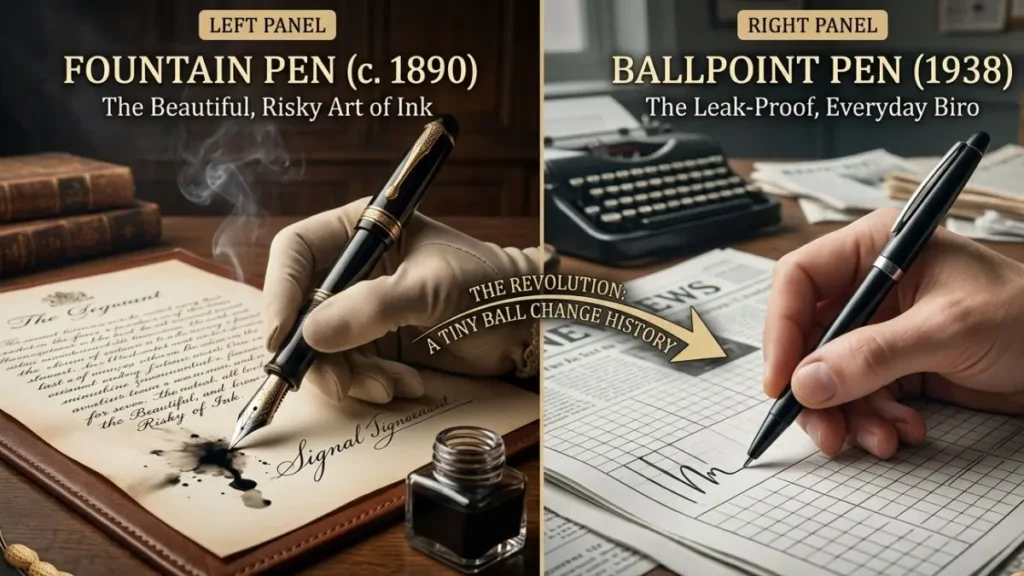
Suppose, the year is 1940. You’re flying a fighter pilot over enemy territory. You need to mark a crucial map, but as soon as you take out your fountain pen, it explodes from the pressure at high altitude, filling your pocket and the map with ink.
This was a common and serious problem in those days. Humans had begun dreaming of traveling to the moon, but the world lacked a pen that could write from every angle and in every place without leaking.
But then a Hungarian journalist noticed something that was right in front of everyone’s eyes, yet no one had paid attention to it. The journey of the ballpoint pen, from a failed invention to reaching every pocket in the world, is no less than a thriller movie. Today, on WhoInventedFacts.com, we’ll unravel the complete story of this “ink revolution.”
Who Invented Ballpoint Pen?
Before the officially recorded inventors, there are some interesting stories about the history of the ballpoint pen. It is said that Galileo Galilei drew a design for something like a ballpoint pen, but there is no proof of this, so it is probably only a legend. Even earlier, Alonzo Townsend Cross is said to have made a ballpoint pen before John J. Loud, but there are no patent records to confirm this.
The First Documented Attempt: John J. Loud (1888)
Although László Bíró is usually known as the inventor of the modern ballpoint pen, the first real pioneer was an American man named John J. Loud. He was born on November 2, 1844. He studied at Harvard University and worked as a lawyer, leather tanner, and inventor.
In his leather tanning business, Loud had a problem. He needed to mark leather to show where it should be cut. Pencils could not write well on the rough leather, and fountain pens made too much mess. Because of this problem, he created a new writing tool with a small metal ball that could turn inside a socket.
On October 30, 1888, Loud received U.S. Patent No. 392,046. This was the first known patent for a ballpoint pen. His design had three small metal balls at the tip of a hollow metal barrel. These balls helped spread the ink evenly and made it possible to mark leather clearly.
In his patent, Loud explained that his invention was an improved reservoir or fountain pen. He said it was especially useful for writing on rough surfaces like wood, coarse wrapping paper, and other materials where normal pens could not be used.
However, Loud’s pen worked better on leather than on paper. It was too rough for normal writing, so it was not successful in the market. Later, the patent expired, and people forgot about the idea of the ballpoint pen for many years.
The Trial and Error Period
Between John J. Loud’s first patent and the creation of the modern ballpoint pen, many inventors tried to fix the main problems of ballpoint pen design. The problems were always similar: sometimes the ink leaked too much, sometimes no ink came out, and sometimes the ink came out unevenly.
Inventors tested many creative ideas. These included ink containers pushed by pistons, springs, and capillary action, which is the ability of ink to move through very small spaces without needing gravity.
Even with all these efforts, the complete solution was not found until the early 20th century, when all the important parts finally came together.
László Bíró: The Father of the Modern Ballpoint Pen
Then came László József Schweiger, who was born in Budapest on September 29, 1899. His father, Mózes Mátyás Bíró, was a Jewish dentist. In 1905, the family changed their surname to Bíró to help them fit more easily into Hungarian society.
László Bíró was a very talented and creative man with many different interests. He first studied medicine, but later became interested in hypnosis. He left university and worked successfully as a hypnotist.
According to his own stories, he also worked at different times as a racing driver, graphologist, biologist, insurance agent, truck driver, painter, writer, and sculptor. He was also said to have helped develop an automatic gearbox for cars, although not all of these claims can be proven today.
What is certain is that Bíró was working as a journalist in Hungary in the early 1930s. He was the editor of a cultural magazine when he got the idea that would later lead to the modern ballpoint pen.
The Inspiration
László Bíró was watching children playing with marbles. He noticed that one marble rolled through a puddle of water and then left a wet line on the dry ground. This gave him an idea: could ink roll over a small ball and create a better way to write?
In a more practical way, Bíró was also unhappy with the pens of his time. As a newspaper editor and part-time painter, he saw a big difference between two kinds of ink. Fountain pen ink took time to dry and could easily smudge. But the ink used in newspaper printing machines dried much faster and left the paper clean. At that time, fountain pens often leaked or smeared, while pencils broke easily and could only write in gray. So there was a clear need for something better.
Bíró tried using fast-drying newspaper ink in a fountain pen, but it did not work. The ink was too thick and sticky to pass through the fountain pen tip. Because of this, he realized he needed a completely new pen design.
The Solution: Ball and Socket Mechanism
Working with his brother György Bíró and a small team, László Bíró spent many years creating the answer. The most important breakthrough was combining thick, quick-drying ink with a tiny metal ball bearing system.
The pen used a small ball that could turn freely inside a socket. When the pen moved across paper, the ball rotated. It picked up ink from inside the pen and placed it onto the paper. At the same time, the ball helped close the ink inside, protecting it from air so it would not dry too early.
The hardest part was finding the correct ink thickness. The ink could not be too thin or too thick. If it was too thin, it would dry slowly on paper. If it was too thick, it could dry too quickly inside the pen refill itself.
In 1931, Bíró showed his first pen, called the “Go-Pen,” at the Budapest International Fair. However, he did not apply for patents until 1938, when he was more confident in the design.
On June 15, 1938, the Bíró brothers applied for patents in several countries, including France, United Kingdom, and Switzerland.
Escape from Nazi Europe
At that time, Hungary was ruled by the Horthy regime. This government was connected with Nazi Germany and followed anti-Jewish policies. Life was becoming more dangerous for Jewish families like the Bíró family.
On December 31, 1938, László Bíró escaped from Hungary with his family and went to France. This was especially important because it was the last day before a new law started that made it illegal to take patents out of the country. Bíró understood that he needed to protect both his invention and his family.
But they could not remain in France for long. In 1940, German forces occupied the country during World War II.
Luckily, Bíró had earlier met Agustín Pedro Justo at the Budapest trade fair. Because of this connection, Bíró and his family were able to escape across the Atlantic to Argentina during the war, taking his valuable invention with them.
Success in Argentina
In Argentina, the Bíró brothers kept improving their ballpoint pens without fear of persecution. Together with their friend Juan Jorge Meyne, they started a company. Their pens were sold under two names: Eterpen and Birome. The name Birome came from combining the names Bíró and Meyne.
In 1943, László Bíró applied for patents again, this time in Argentina and also in the United States. This was an important step in the history of the ballpoint pen, although it still took time before it became a product used by everyone.
Even today, ballpoint pens are called biromes in Argentina. In Hungary, they are called Go-Pens, the name Bíró wanted. In many English-speaking countries, Italy, and other places, they are called biros. In France, they are known as birons.
Argentina celebrates Bíró’s birthday, September 29, as Inventors’ Day.
The Royal Air Force Connection
The use of pen during the war was an important step in making it famous. British businessman Henry George Martin saw the value of László Bíró’s invention and sold ballpoint pens in large numbers to the Royal Air Force.
At that time, airplane navigators still used maps and pens during flights. Fountain pens caused serious problems at high altitudes. Because of changes in air pressure, they often leaked, made ink blots, or even burst open. Ballpoint pens, however, worked much better in the air because they did not depend on pressure to move the ink.
The British government bought Bíró’s patent and had the pens produced specially for the Royal Air Force. It is said that the Air Force ordered 30,000 pens in 1943.
This military use helped make the biro known around the world, and its popularity quickly began to grow internationally.
The American Ballpoint Pen Race
After World War II, many companies wanted to bring the modern ballpoint pen to the United States. This created a strong competition, with many dramatic and aggressive business moves.
Eversharp’s Failed First Move
Eversharp, which TIME magazine described as “the biggest pen and pencil maker in the world,” bought the North and Central American rights to the ballpoint pen for half a million dollars. The company then started making its own version.
Eversharp had received permission to produce ballpoint pens using László Bíró’s patent.
However, the company still faced quality problems. Their pen did not become successful right away. This delay in releasing a good product would later cost them a lot.
Milton Reynolds and the Reynolds Rocket
Meanwhile, Chicago businessman Milton Reynolds had seen Bíró’s pen during a trip to Argentina. After returning, he decided to quickly create his own version of the ballpoint pen.
Reynolds tried to avoid existing patent restrictions. Instead of using the same ink system, he designed a different method where ink flowed using gravity. This helped him bypass parts of the original design. However, he knew this system was not perfect and could leak easily. Still, he rushed the product into production to beat competitors like Eversharp.
On October 29, 1945, the Reynolds Rocket was launched at Gimbels in New York City. Each pen cost $12.50, which was extremely expensive at the time—about a full day’s wage for many workers.
At first, the Reynolds Rocket became very popular. Thousands of pens were sold in the first week. But soon, serious problems appeared. The pens leaked and did not work properly. Because of this, customer interest dropped quickly, and sales fell sharply. The early excitement could not save a poorly designed product.
Other American Attempts
After the early success and failure of first-generation ballpoint pens, many other companies in the United States entered the market with mixed results.
One company, Eberhard Faber, could not really succeed in the ballpoint pen business, even though it was already a well-known brand.
Another company, the Frawley Pen Company (later known as Papermate), had a strong business team and managed to develop a reliable pen that became successful.
The Parker Pen Company, which was already famous for fountain pens, created the T-Ball Jotter. It quickly became very popular and turned into a common household pen.
At this stage, the ballpoint pen was becoming a global sensation, and many companies wanted to benefit from it. However, the final breakthrough that made the pen truly perfect and widely available would come from a French inventor.
Marcel Bich and the BIC Revolution
Although László Bíró created the modern ballpoint pen, it was French businessman Marcel Bich who turned it into a cheap, everyday item used around the world. Ironically, Bich earned a huge fortune from the idea, while Bíró himself did not.
At first, Bich was not impressed by the idea of the ballpoint pen. As someone already working in the pen industry in France, he thought fountain pens were good enough and saw no need for a new type of pen.
However, he soon changed his mind. He realized that ballpoint pens were much easier to use and had strong business potential. This understanding led him to fully support and develop the idea on a large scale.
The BIC Cristal
In the late 1940s, Marcel Bich acquired the rights related to László Bíró’s invention. Historical records are not fully clear on all early deals, but Bich ensured that his company properly obtained licensing rights through the Swiss-based patent holders. Unlike many competitors who copied or bypassed the design, he followed legal licensing rules.
He then improved the original concept and developed his own refined version, often associated with BIC.
Using Bíró’s basic mechanism along with his own research into ink and materials, Bich created the BIC Cristal. It used a small high-quality steel ball for writing, but most of the pen was made from cheap and simple materials to keep the price low.
Its design was very practical:
- Transparent body so users could see ink levels
- Simple, lightweight plastic structure
- Colored cap to prevent drying out
This mix of low cost, reliability, and smart design turned it into a modern classic.
After its release in 1950, the BIC Cristal quickly spread around the world and became a common household item. At first, the company struggled to gain attention, but later success came after its famous advertising slogan in the 1960s: “Writes the First Time, Every Time!”
A Global Phenomenon
The real worldwide success of the ballpoint pen began with the affordable and reliable BIC Cristal, produced by BIC under Marcel Bich.
When ballpoint pens first appeared in the Germany in 1950, they were still expensive luxury items, costing about 20 marks each. But as production increased and BIC’s design proved successful, prices dropped quickly all over the world.
By the mid-1950s, around one billion pens were already in use globally. Today, more than 100 billion units of the BIC Cristal have been sold, making it one of the most successful consumer products in history. Its simple and efficient design was even added to the collection of the Museum of Modern Art as an example of excellent functional design.
Bich’s company later expanded into other everyday products like disposable lighters and razors, bringing him great wealth and making BIC a globally recognized household brand.
In Germany, the ballpoint pen was also officially registered as a trademark (DE trade mark 625157), further strengthening its commercial success and global recognition.
László Bíró: The Inventor Who Missed the Fortune
Despite creating one of the most widely produced inventions in history, László Bíró did not become very wealthy from it. He had already sold the rights to his invention, and historical records are not completely clear about all the details of those early deals. Because of this, many companies later produced ballpoint pens, sometimes without strict attention to licensing agreements.
Later in life, Bíró is said to have spoken about this with acceptance rather than regret. He reportedly said:
“I often think that with a little more business skill I could have made a huge fortune with my invention, but I harbor no grudges. The biros has become the most popular writing instrument in the world, it has overtaken the pencil and fountain pen, and that thought makes me forget the riches I missed out on.”
Even though he did not gain great financial success, his invention changed everyday writing across the world and became a lasting part of daily life.
Continued Innovation
After the success of the ballpoint pen, László Bíró did not stop inventing. He continued working creatively later in life while employed at a pen company called Sylvapen.
He reused the same rotating-ball idea from the pen in a completely different product: perfume and deodorant application. This led to the concept of the rollerball deodorant, where a small rolling ball helps spread liquid evenly on the skin. However, this idea did not succeed in mass production at the time and only became widely used many years later. Once again, Bíró did not earn significant profit from it.
He also remained interested in scents and developed several perfume-related ideas during his life. In addition, he worked on a wrist device that could measure blood pressure and temperature—an early idea similar to what modern smartwatches do today.
Bíró also created a type of plastic he called Birolit, and continued filing various patents, including DE912309B. He kept inventing until his death on October 24, 1985, at the age of 86.
Although the ballpoint pen did not make him rich, his name became permanently linked with it. In many parts of the world, “biro” is still used as a common word for a ballpoint pen, keeping his legacy alive to this day.
Technical Details and Fun Facts
How a Ballpoint Pen Works
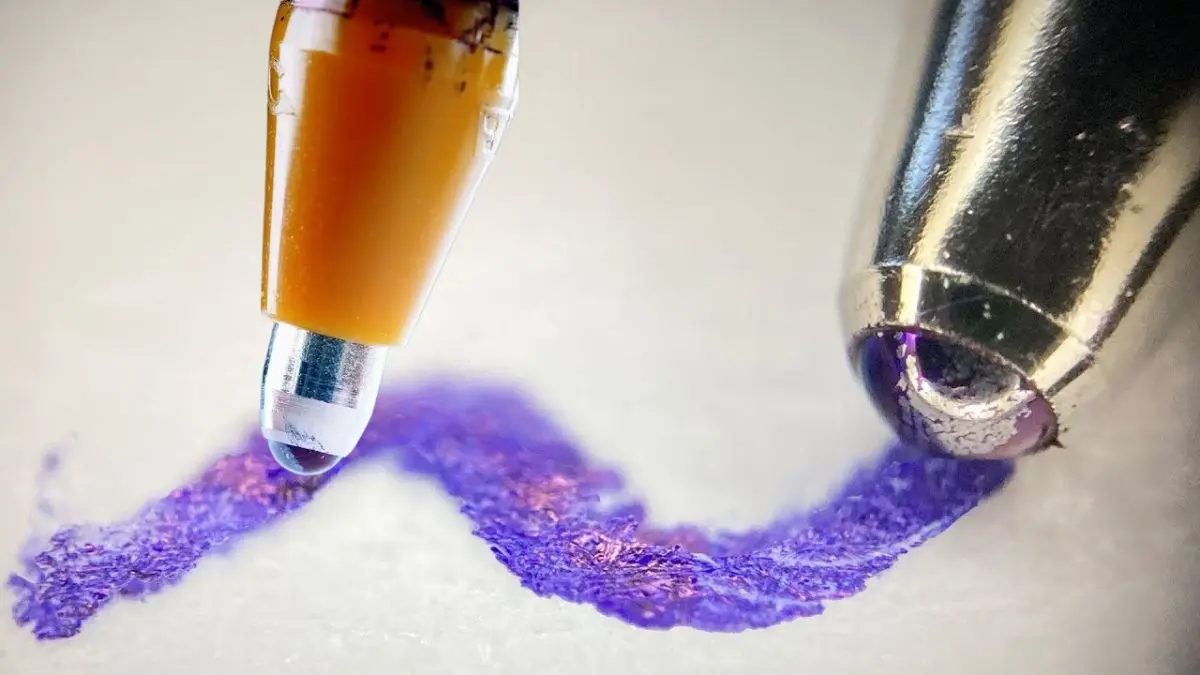
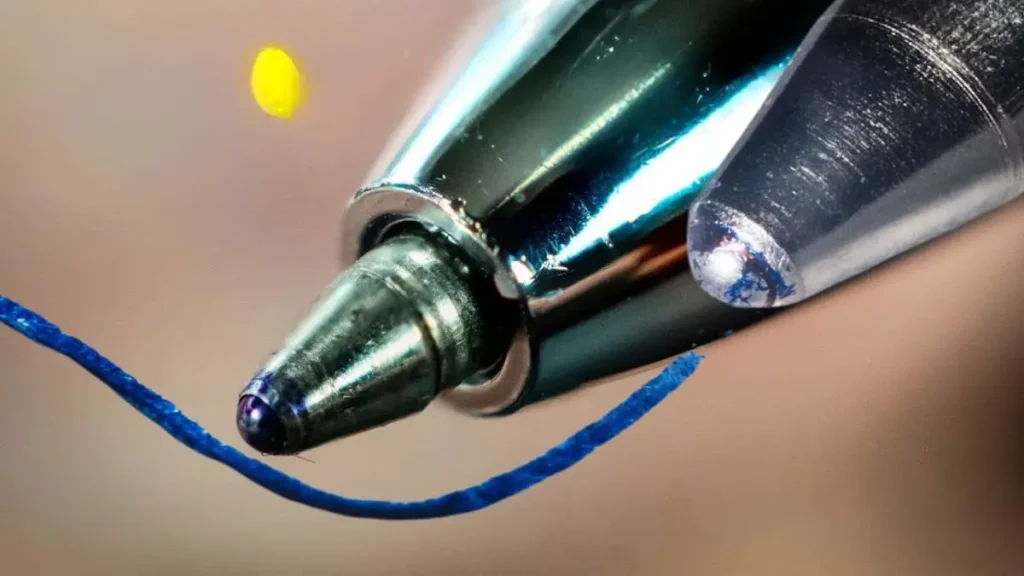
The ballpoint pen uses a simple but clever ball-and-socket system. A tiny metal ball sits in a small socket at the tip of the pen. When you write, the ball rolls smoothly on the paper.
As it rolls, it:
- Picks up thick ink from inside the pen
- Transfers it onto the paper
- At the same time, it blocks air from entering the ink chamber, so the ink does not dry out
This allows controlled and even writing without leaks.
Ballpoint Pen Ink
Ballpoint pen ink is usually a thick paste made of:
- About 25–40% dye
- Oil-based liquid
This oil-based ink is important because it dries quickly on paper and does not smudge easily, unlike water-based fountain pen ink.
Writing Capacity
On average, a single ballpoint pen can write about 45,000 words before running out of ink. That is roughly equal to a full book or more.
Current Production
In the United States alone, around 2 billion ballpoint pens are produced every year. This makes it one of the most widely manufactured objects in human history.
Induction into History
László Bíró was honored in 2007 by being inducted into the National Inventors Hall of Fame for his invention (U.S. Patent No. 2,390,636). He died on October 24, 1985, but lived long enough to see his invention used all over the world.
The RAF Advantage
The Birome pen was also licensed and produced for the Royal Air Force. It worked especially well at high altitudes because fountain pens often failed due to air pressure changes, leaking or spilling ink during flight.
Conclusion: A Legacy Written in Ink
The history of the ballpoint pen shows how human creativity, persistence, and business skill can shape everyday life. It is also a story full of irony, where the people who created the idea did not always become the ones who benefited most from it.
From John J. Loud, who first patented a concept for marking rough surfaces, to László Bíró, who developed a practical working design during a difficult time in history, and finally to Marcel Bich, who turned it into a global everyday product, the pen evolved through many hands.
Each played an important role:
- Loud created the first idea, but it was not practical for daily writing.
- Bíró perfected the design under pressure and wartime conditions, making it truly usable.
- Bich made it cheap, reliable, and available to millions of people worldwide.
The ballpoint pen solved long-standing problems in writing such as smudging, leaking, fragility, and high cost. It made writing simple, fast, and accessible to almost everyone.
Today, less than a century after its widespread introduction, it is hard to imagine daily life without it. Whether called a biro, birome, Go-Pen, or ballpoint pen, this small device has become a permanent part of human communication.
László Bíró did not become wealthy from his invention, but his impact is enormous. Every time someone writes a note, signs a document, or sketches an idea, his legacy continues quietly in the background.
In the end, the story of the ballpoint pen shows that innovation is not just about invention or profit—it is about how an idea spreads and becomes part of everyday human life.