
Who Invented the Tea Bag? One Small Mistake that Revolutionized the World of Tea!
Who Invented the Tea Bag? Thomas Sullivan
Tea is the second most widely consumed drink in the world, after water. These days, most of us simply pick up a tea bag, dip it in hot water, and our tea is ready. But did you know that the tea bag wasn’t invented by a scientist? It was the result of a salesman’s mistake and the “laziness” of customers!
Its story includes accidents, inventions, arguments, patents, even bad glue and world wars.
Before the Bag: How Tea Was Drunk for Centuries
For thousands of years, people made tea by hand using loose tea leaves. They measured the leaves, placed them in a pot, poured in hot water, let the tea steep, and then strained it before drinking. Making tea was not just about preparing a drink, it was a special ritual. In many parts of the world, people still follow this tradition today.
But this method created some problems. People often made more tea than they needed, especially when they wanted only one cup. Extra tea often went to waste or lost its freshness. They also needed a strainer, and cleaning the teapot took extra time and effort.
Before tea bags became common, some people used metal infusers, often called tea eggs or tea balls. These small metal containers had tiny holes and usually hung from a chain. People filled them with tea leaves and placed them in cups or teapots. This method worked, but many found the infusers expensive, tricky to fill, and sometimes difficult to clean.
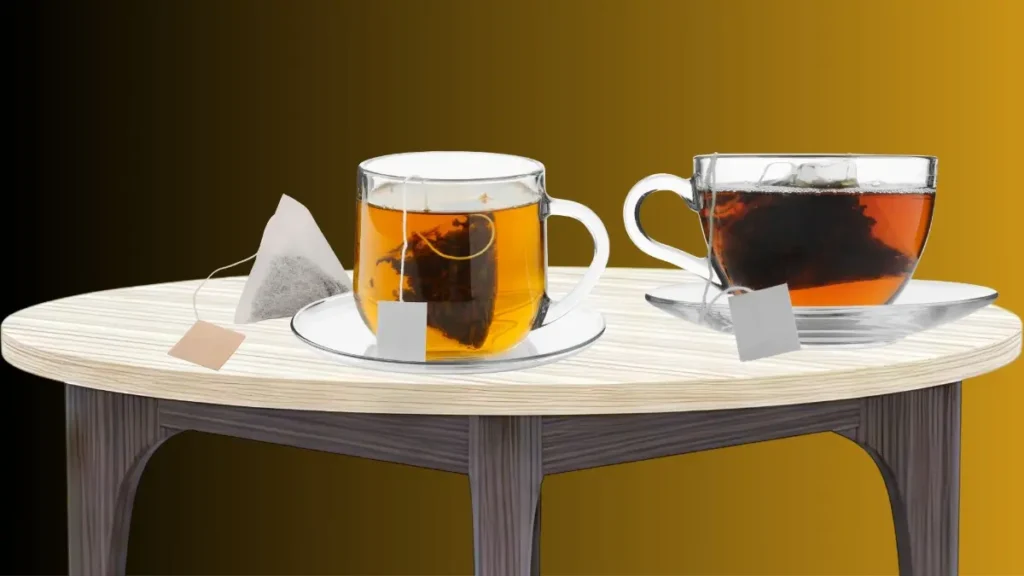
Who Invented the Tea Bag? Full History
A Note from Ancient China
The idea of putting tea inside a small porous container is not completely modern. As early as the 8th century, during the Tang Dynasty, people in China used folded and sewn paper bags to store and protect tea during travel and storage. Their goal was not to brew tea inside the bag, but to keep the tea fresh. Even so, the basic idea that later led to the modern tea bag had already begun.
The First Documented Use of Brewing Tea in a Bag (1836)
The earliest known written record of tea brewed inside a bag comes not from America or Asia, but from Birmingham. In 1836, the Preston Temperance Advocate described how large Temperance Society gatherings served tea to hundreds of people at once.
They placed tea inside quarter-pound bags and hung them inside huge metal containers. Then they poured boiling water over the bags, let the tea brew, and served it through a tap at the corner. One member even said this method made excellent tea.
This was important because the Temperance Society promoted tea as an alternative to alcohol. Their large tea gatherings created a big challenge — how could they make tea quickly and neatly for hundreds of people? Using bags solved that problem. It became the earliest confirmed example of brewing tea in a bag instead of simply storing tea in one.
Thomas Fitzgerald’s 1880 Patent
Four decades later, in 1880, a man from Boston named Thomas Fitzgerald took the idea further and received a patent for a personal tea-brewing device. His invention used a porous muslin or cloth bag attached to a float with a long handle, making it easy to carry from the kitchen to the table. People could fill the bag with tea, brew it, and then remove it after use. It was something between a modern tea bag and a tea infuser.
Later, in 1893, another inventor from Massachusetts, Edward Dillingham, created his own bag-shaped strainer. It had an opening at one end where people could add tea or coffee.
Neither invention became a big commercial success, but both were important. They show that the idea of a personal tea bag or small bag-based infuser existed long before the 20th century and before modern tea bags became common.
The First Patent: Roberta Lawson and Mary Molaren (1901)
In 1901, two women from Milwaukee — Roberta C. Lawson and Mary Molaren — filed the first patent for something very close to the modern tea bag. They received the patent for their “Tea Leaf Holder” in 1903.
They developed this idea to solve a simple problem.
Making a whole pot of tea for one cup wasted both tea and money. They wanted people to brew only the amount they needed. At the same time, they needed a design that kept the tea leaves inside while still allowing hot water to flow through and brew the tea properly.
They solved this by creating a small mesh pocket woven from cotton thread. They added a flap for filling it with tea leaves and used a thin wire to close it. In almost every important way, they created a tea bag.
History does not tell us much about what Lawson and Molaren did after receiving the patent.
They did not become wealthy from the invention, and many people no longer remember their names. Still, their patent remains important, and it came seven years before the more famous Sullivan story.
Interestingly, in 1901, Elena Molokhovets also described brewing tea in a muslin bag in one of her cookbooks. This shows people in different countries were trying similar ideas at the same time.
Accident That Changed Everything: Thomas Sullivan (1908) Invented the Tea Bag
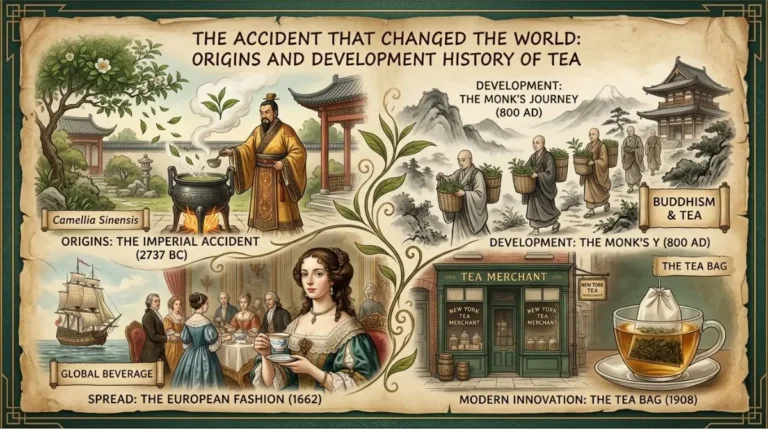
The most famous tea bag story began in New York City in 1908 with Thomas Sullivan, a tea and coffee importer. He wanted a cheaper way to send tea samples to customers. At that time, people usually used metal tins for samples, but they were heavy and expensive. To save money, Sullivan packed his tea in small hand-sewn silk pouches. He made this choice simply to cut costs.
He expected customers to open the pouches, remove the tea leaves, and brew the tea as usual. But customers did something unexpected. Since many already knew about metal tea infusers, they thought the silk pouches worked the same way. Instead of opening them, they dropped the whole bag into hot water and brewed the tea directly through the silk. They loved how easy it was.
Soon customers began sending orders back with a special request — send more tea in those little bags. Sullivan quickly saw the opportunity and started selling tea in bag form.
There was just one problem. Silk was woven too tightly and did not let water move through easily, so tea brewed too slowly. Sullivan solved this by switching to gauze, which allowed better water flow and made brewing easier. This led to the first purpose-made commercial tea bags.
To be fair, Sullivan did not invent the tea bag itself. Roberta C. Lawson and Mary Molaren had patented a similar idea years earlier. Thomas Fitzgerald had created a related design decades before, and the Temperance Society had brewed tea in bags as early as 1836. What Sullivan did was turn an accidental idea into a successful business. His real achievement was making tea bags popular around the world.
Adulteration, Bad Glue, and the Horniman Problem
The commercial tea bag did not arrive in a perfect form. Early on, it faced a serious problem of dishonesty. Some traders mixed expensive tea with cheap hay to increase their profits.
To stop this fraud, a British businessman named John Horniman began sealing tea bags tightly. This step solved the problem of adulteration, but it created a new issue. The glue used in sealing added a bad taste to the tea and ruined the flavor.
Because of this, early tea bags often had quality problems. Poor sealing materials affected the industry for some time. These issues supported to people who preferred traditional loose-leaf tea over tea bags.
The Teebombes: World War One (1914-1918)
The First World War became an unexpected testing ground for the tea bag idea. The German company Teekanne began mass-producing small cotton-gauze bags filled with tea leaves and sugar. They packed them by hand and sent them to German soldiers on the front lines.
Soldiers quickly gave these packets a nickname, “Teebombes,” because they looked like the hand grenades they carried. The bags were practical because they stayed clean and required no brewing tools. Soldiers could simply drop them into hot water and drink.
However, there was a major flaw. The gauze used by Teekanne was too thick, so very little flavor passed into the water. Many soldiers complained that the drink tasted like slightly brown water. The added sugar helped a little, but it could not fully fix the weak taste.
Even with these problems, the Teebombes were widely used. They showed that a single-serve, portable tea bag could actually work in real conditions. This experience helped strengthen the idea that tea bags had real practical value.
The Machine That Made Mass Production Possible: Adolf Rambold (1929)
A major turning point came in 1929 when an engineer named Adolf Rambold worked at the German company Teekanne.
Before Rambold’s innovation, workers made tea bags by hand. This process took a lot of time and limited production. Rambold changed this system when he invented the first automatic tea bag packing machine, which he called the Pompadour. The machine produced about 35 gauze tea bags every minute. For the first time, companies produced tea bags on a large commercial scale.
Rambold continued to improve the design. In 1935, he created a system that placed each tea bag inside its own paper wrapper. This improved storage, transport, and sales.
In 1948, Rambold introduced his most important invention — the double-chamber tea bag. He designed it from a single piece of paper and folded it without using glue or heat sealing. This design created four surfaces instead of two, which allowed water to flow more easily. As a result, tea brewed faster and tasted better. He received a patent for this design in 1952. Later, companies like Lipton adopted a similar design and called it “flo-thru.”
In 1949, Rambold also designed a machine called the Constanta. This machine produced double-chamber tea bags at high speed. It became very successful and companies sold it in more than 50 countries. People still use it today.
Rambold’s double-chamber tea bag became so important in design history that the Museum of Modern Art in New York added it to its permanent collection. It lists the design as object number 167.2005 and displayed it in the 2004 exhibition Humble Masterpieces.
The Paper Era (1930s) and the Rectangular Shape (1944)
Adolf Rambold improved tea bag production in Germany. At the same time, another important development happened in the United States. In 1934, an inventor named Faye Osborne patented a process that produced long-fiber paper from the abaca plant. This plant, a type of banana grown in the Philippines and Colombia, provides strong natural fiber.
This special paper stays strong when wet, so it holds tea leaves inside the bag. At the same time, it allows water to pass through easily because it remains light and porous. Over time, manufacturers adopted this material as the standard for tea bags, and they still use it today.
In 1930, another inventor, William Hermanson, co-founder of the Technical Papers Corporation in Boston, patented a heat-sealed paper tea bag. This design allowed machines to produce tea bags more reliably. He later sold this patent to the Salada Tea Company, one of the largest tea companies in the United States at the time. In a later twist of history, Teekanne bought Salada’s successor company in 1995, bringing the story full circle.
During the 1930s, large factories in the United States ran tea bag machines day and night. These machines produced around 18,000 tea bags every day. As production increased, loose-leaf tea slowly disappeared from American store shelves.
In 1944, Tetley introduced the flat rectangular tea bag. This design made packaging easier and improved brewing convenience. Before this change, tea bags had irregular, sack-like shapes.
Early tea bags came in two sizes. One larger size brewed a full pot, while a smaller size made a single cup. Over time, consumers preferred single-cup brewing, so manufacturers gradually removed the larger bags from the market.
The CTC Revolution: Making Tea Fit the Bag
The growing popularity of tea bags created a new problem for the tea industry. Tea bags were very small, so they could only hold fine, tiny tea particles. Because of this, the industry did not produce enough small-grade tea to meet rising demand. Something had to change in how tea was processed.
In 1931, a solution came from William McKercher, who worked as the superintendent of the Amgoorie Tea Estate in Assam, India. He invented a new processing method called CTC, which stands for cut, tear, and curl. Instead of gently rolling whole tea leaves, machines passed the leaves through sharp cylindrical rollers. These rollers cut, tore, and curled the leaves into small, uniform pellets.
CTC tea brewed very quickly and produced a strong, dark color. It also worked well with milk, which made it popular in many countries. Although tea experts did not prefer its taste, it was cheap, strong, and easy to produce. Over time, CTC became the main method used in the global tea industry. Today, about 95% of black tea in the world comes from this process.
The tea bag and CTC tea supported each other. Tea bags created a huge demand for small tea particles, and CTC provided the perfect type of tea to fill them.
Tea Bags Reach Britain: A Long and Reluctant Adoption
Americans quickly accepted tea bags in the 1920s and 1930s, but British resisted them for a long time. A representative of Tetley visited the United States in 1939 and brought the idea back to Britain. However, World War II stopped any commercial launch because of material shortages. The key material, abaca fiber used for tea bag paper, mostly came from the Philippines, and the war cut off supply routes.
After the war ended, companies finally launched tea bags in Britain. In 1952, Lipton patented the “flo-thru” tea bag for the British market. This design used the double-chamber idea developed earlier by Adolf Rambold. Lipton also printed brewing instructions on the paper tags, which helped new users understand how to use tea bags easily.
In 1953, Tetley officially introduced tea bags in the United Kingdom. Even then, British people did not adopt them quickly. By 1968, only about 3% of tea in the UK came from tea bags. By 1971, the number rose slowly to just 12.5%. Many people still preferred traditional loose tea. Cultural habits played a big role in this resistance. Some Britons also returned from America with stories of weak tea made from bags sitting in water, which they considered poor quality.
British tea bags also looked slightly different. Many of them did not include strings. Manufacturers designed them this way because British consumers cared more about convenience than controlling brewing time. They simply wanted an easy way to make tea without cleaning loose leaves.
Eventually, convenience won. By 2007, about 96% of tea in the UK came from tea bags. A 2020 survey showed that Britons used around 61 billion tea bags every year, making them a normal part of daily life.
A Historical Footnote on Rudi Dutschke
In the 1960s, German student activist Rudi Dutschke threw a tea bag at the ceiling of the Wilhelm Hoeck 1892 pub in Berlin’s Charlottenburg district. The tea bag stuck to the ceiling. According to reports, it still remains there today, making it possibly the most famous tea bag that no one ever brewed.
The Pyramid Arrives: A New Shape for a New Era (1996-1997)
For most of the 20th century, flat rectangular tea bags dominated the market. Companies filled these bags with very fine tea particles called fannings and dust. These are the small leftover pieces after processing higher-quality tea.
These fine particles still produced a strong color in the cup, which people expected. However, they gave weaker flavor compared to whole-leaf tea.
The flat shape of the tea bag also caused a problem. It did not give tea leaves enough space to move or expand. Tea needs room and good water flow from all sides to release full flavor. Flat bags limited this process.
In 1996, the company Brooke Bond introduced a new design after testing different shapes. In 1997, PG Tips launched it as the “Pyramid Bag.”
This pyramid shape gave tea more space inside the bag. It allowed the leaves to move freely and expand while brewing. Because of this, the tea tasted better and brewed more evenly.
The pyramid design also made it possible to use whole-leaf tea in tea bags. People could now enjoy premium teas like Darjeeling, Oolong, green, and white tea in bag form. This improved how people viewed tea bags.
Manufacturers made pyramid bags from materials like nylon, silk, or plant-based soilon made from corn starch. These transparent materials also let people see the tea inside, which made the product look more modern and attractive.
The Microplastics Problem
For most of the 20th century, people did not think much about the environmental or health effects of tea bags. As the 21st century progressed, scientists and the public started to pay more attention to microplastic pollution, and tea bags came under close study.
In 2019, researchers at McGill University published a study in Environmental Science and Technology. They found that steeping a single plastic tea bag in hot water at about 95°C released around 11.6 billion microplastic particles and 3.1 billion nanoplastic particles into one cup of tea.
These particles came mainly from polypropylene, a plastic used to heat-seal many tea bags that look like paper. Many of these “paper” tea bags actually contain a small amount of plastic to help machines seal them during production.
A 2021 study found that 15 out of 22 tea bags labeled as cellulose also contained plastics like polyester, polyethylene, or polypropylene. These materials do not break down naturally. They can release microplastics during brewing and even during composting.
Some companies started to respond to these concerns. In 2018, Co-op Food removed plastic from its own-brand tea bags. In the same year, PG Tips also began replacing polypropylene glue in its pyramid bags with a corn-starch alternative.
However, the issue is still not fully solved across the industry. People who want to avoid plastic in tea often check packaging carefully or switch back to loose-leaf tea.
The issue first gained public attention in 2017 when a gardener named Mike Armitage in Wrexham, Wales, noticed that composted tea bags left behind plastic waste. He started a petition asking Unilever to remove plastic from tea bags, which helped bring the issue into wider public awareness.
The Loose-Leaf Renaissance
The popularity of the tea bag came with a real cost. When people stopped seeing, smelling, and handling loose tea leaves, they also lost their connection to the product. They no longer thought about where the tea came from, what variety it was, or how it was processed. Tea slowly became just another simple item on a supermarket shelf.
This loss of connection eventually created a reaction. In the late 20th century, and even more in the 2000s and 2010s, people started to return to specialty tea. They began to focus on single-origin teas, specific tea estates, harvest seasons, and detailed processing methods. Tea started gaining the same attention that wine and specialty coffee already enjoyed. This loose-leaf revival is still growing today.
The difference in quality still exists. Whole tea leaves that have space to expand in water release more complex and richer flavors. Crushed tea particles used in most tea bags cannot produce the same depth of taste inside a sealed bag.
Tea bags offer clear convenience, but they also come with a trade-off in flavor and experience.
Tea Bags Around the World
In Russia, people first learned about tea bags as early as 1901, when a cookbook mentioned the idea. However, tea bags stayed rare for most of the 20th century. They only became widely available in the 1990s, mainly in cafes and workplace canteens. At first, people saw them as something unusual or foreign. It was not until around 2015 that tea bags became the most popular way to drink tea in Russia.
In the United States today, more than 96% of tea sold comes in tea bags. In contrast, many countries in East Asia and other traditional tea cultures still prefer loose-leaf tea. In those places, people treat tea bags as a quick and convenient option, not the standard way to make tea.
The World’s Most Expensive Tea Bag
A British jeweler once created the world’s most expensive tea bag. He decorated it with 280 diamonds and valued it at around 14,000 US dollars. This tea bag was never meant for real use. It was created more as a luxury art piece than for brewing tea.
Tea Bag Folding: An Unexpected Art Form
After people use tea bags, they usually throw them away. However, some people turned the empty wrappers into art. Tea bag folding began in 1992 when Dutch artist Tiny van der Plas created it. She needed a decorative birthday card and folded eight tea bag wrappers into a patterned design.
Her simple idea turned into a creative craft. Today, people use tea bag folding to create small decorative designs and ornaments. Some even use specially printed sheets, although many artists still prefer real used tea bag wrappers for more authentic results.
🫖 The Complete Timeline of the Tea Bag
| Year | Event |
|---|---|
| c. 700 AD | Tea is packed in folded paper bags in Tang Dynasty China for preservation. |
| 1836 | Preston Temperance Advocate describes tea brewed in quarter-pound bags in Birmingham — earliest known written reference to brewing tea in a bag. |
| 1880 | Thomas Fitzgerald (Boston) receives patent No. 234,556 for a muslin tea-brewing bag with a float handle. |
| 1893 | Edward Dillingham designs another bag-shaped tea strainer in Massachusetts. |
| 1897 | Early US patent applications appear for tea infusing devices. |
| 1901 | Roberta C. Lawson and Mary Molaren file a Tea Leaf Holder patent; Elena Molokhovets describes muslin bag brewing in a Russian cookbook. |
| 1903 | Lawson and Molaren patent granted — first formal patent resembling a modern tea bag. |
| 1908 | Thomas Sullivan accidentally popularizes tea bags by sending silk sample pouches; later switches to gauze. |
| 1914–1918 | Teekanne produces “Teebombes” for German soldiers during WWI; gauze is too thick for good infusion. |
| 1920s | Commercial tea bag production expands rapidly in the United States. |
| 1929 | Adolf Rambold invents the Pompadour, the first automatic tea bag packing machine (35 bags/min). |
| 1930 | William Hermanson patents heat-sealed paper tea bag; sells patent to Salada Tea Company. |
| 1931 | William McKercher invents the CTC (Cut, Tear, Curl) tea processing method in Assam, India. |
| 1934 | Faye Osborne patents long-fiber paper from abaca plant (becomes standard tea bag material). |
| 1935 | Rambold patents individually wrapped tea bag system. |
| 1939 | Tetley representative brings tea bag concept to UK; launch delayed due to WWII. |
| 1944 | Rectangular tea bag shape is introduced. |
| 1948 | Rambold designs double-chamber tea bag (no glue or heat sealing). |
| 1952 | Rambold receives patent; Lipton launches flo-thru tea bag with brewing instructions. |
| 1953 | Tetley officially launches tea bags in the UK. |
| 1960s | Tea bags remain under 3% of UK tea consumption. |
| 1968 | Only 3% of tea in UK is brewed using tea bags. |
| 1971 | UK tea bag usage rises to 12.5%. |
| 1992 | Tiny van der Plas develops tea bag folding as an art form. |
| 1995 | Teekanne acquires Redco Foods (successor to Salada Tea Company). |
| 1996–1997 | Brooke Bond and PG Tips introduce pyramid tea bags. |
| 2004 | Rambold’s design displayed at MoMA in “Humble Masterpieces.” |
| 2007 | Tea bags account for 96% of tea in the UK. |
| 2015 | Tea bags become market leaders in Russia. |
| 2017 | Mike Armitage raises awareness about plastic residue in composted tea bags. |
| 2018 | Co-op Food and PG Tips begin removing plastic from tea bags. |
| 2019 | McGill University study finds billions of microplastics released per tea bag. |
| 2020 | Britons use ~61 billion tea bags per year. |
| Today | Tea bags dominate US market (>96%). ~95% of global black tea is CTC. Loose-leaf revival and sustainability concerns continue. |
Conclusion
The tea bag is not a glamorous invention. It did not come from one sudden moment of genius. Instead, it developed slowly through many small contributions over time. Women in Wisconsin tried to reduce waste. A Temperance Society tried to serve tea to hundreds of people at once.
A Boston inventor worked on a design in 1880. A New York merchant tried to save money on tin containers. A German engineer improved machines. A world war disrupted supply chains. Even then, Britain took decades to fully accept an idea that history had already pointed toward.
What makes the tea bag remarkable is how well it solved real problems. It is cheap, simple, and easy to carry. It needs no special equipment. It creates very little mess and gives a consistent result every time. After more than 100 years, the basic design has barely changed.
A small porous bag. A measured amount of tea. A string and a tag. You drop it in hot water, wait a few minutes, and remove it.
Very few inventions from 1836 are still used so effectively and reliably in 2026.